
Kidney disease symptoms in females can include changes in urination, persistent fatigue, swelling, foamy urine, blood in the urine, and difficulty controlling blood pressure. The challenge is that early kidney disease often causes few noticeable symptoms, so mild changes can easily be dismissed or linked to another health concern.
Women may experience kidney-related symptoms alongside hormonal changes, urinary tract problems, pregnancy-related conditions, or other medical issues. This can make the underlying cause harder to recognise. Knowing the early signs, understanding the more common symptoms, and recognising personal risk factors can help women seek testing at the right time and identify kidney problems before they progress.
Early Warning Signs of Kidney Disease in Females
Early kidney disease is often quiet. A woman can have changes in kidney function without feeling seriously unwell, which is one reason early damage may go unnoticed.
The earliest warning signs are usually subtle rather than dramatic. Feeling unusually tired for several weeks, noticing mild puffiness around the eyes in the morning, or waking more frequently at night to urinate can seem easy to explain away. Busy schedules, poor sleep, stress, ageing, and hormonal changes are often blamed first.
Another concern is that women may already be accustomed to changes in their energy levels or body due to menstruation, pregnancy, or other health conditions. Mild symptoms can therefore become part of the background of everyday life.
These subtle changes are not enough to diagnose kidney disease on their own. Still, persistent symptoms deserve attention when they occur alongside risk factors such as diabetes, high blood pressure, obesity, or a family history of kidney problems. Early testing is often more useful than waiting for symptoms to become severe, particularly because chronic kidney disease can progress gradually.
Common Kidney Disease Symptoms in Women
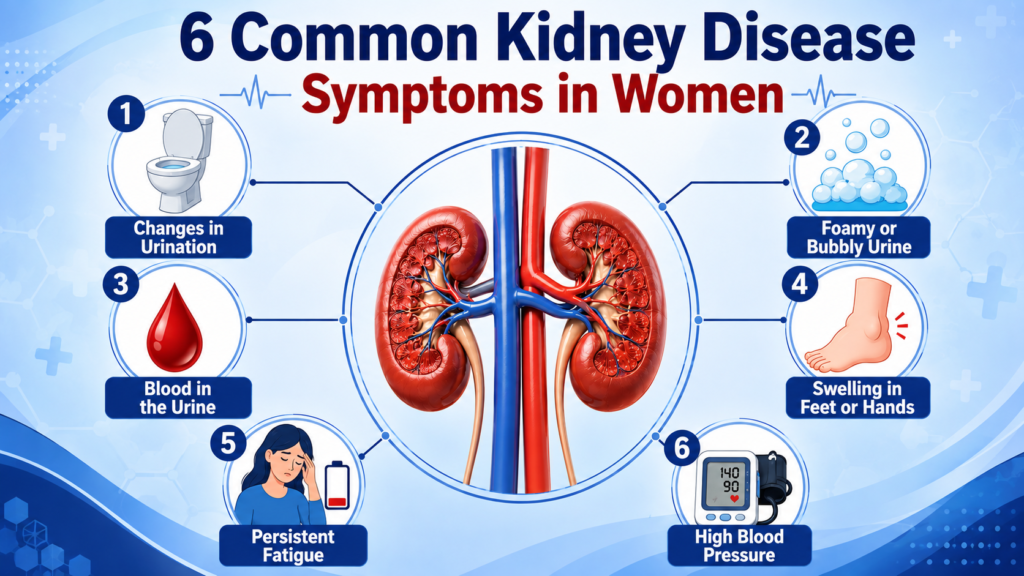
Once kidney problems begin affecting normal body functions more noticeably, certain symptoms may become easier to recognise. These symptoms still have other possible causes, but persistent changes should not be ignored.
Changes in Urination
A noticeable change in urination is one of the symptoms patients often ask about first. This might mean needing to urinate more frequently, producing less urine than usual, waking repeatedly during the night, or noticing a clear change in the amount of urine.
The kidneys control how much water and waste leave the body through urine. When kidney function is affected, that process can change. Frequent urination alone does not prove kidney disease because infections, increased fluid intake, pregnancy, and other conditions can also cause it. The pattern becomes more concerning when the change persists or appears with swelling, abnormal urine, or known kidney problems.
Foamy or Bubbly Urine
Many people notice occasional bubbles in the toilet, which is usually not a cause for concern. Persistent, unusually foamy urine is different, particularly when the foam appears repeatedly and does not quickly disappear.
This can happen when protein in the urine passes through the kidneys’ filters. Healthy kidneys normally prevent significant amounts of protein from entering the urine. Damage to those filters can allow protein to leak through. Repeated foamy urine does not automatically mean kidney disease, but it is worth discussing with a doctor because a simple urine test can help identify the cause.
Blood in the Urine
Blood in the urine may be visible as pink, red, brown, or tea-coloured urine. In other situations, the amount of blood is too small to see and is detected only during laboratory testing.
The cause is not always kidney disease. Kidney stones, urinary infections, and several other urinary tract conditions can also lead to blood in the urine. Still, visible blood should never be ignored or assumed to be harmless. A medical evaluation is needed to determine where the bleeding is coming from and whether the kidneys or another part of the urinary system are involved.
Swelling in the Feet, Ankles, Hands or Face
Persistent swelling can develop when the body retains more salt and fluid than it should. Women may first notice tight shoes by the end of the day, rings becoming difficult to remove, or puffiness around the eyes after waking up.
The kidneys help maintain the body’s fluid balance. When that balance is disrupted, fluid can collect in tissues and cause visible swelling. Standing for long periods, certain medicines, heart problems, and other conditions can also contribute. Swelling becomes more concerning when it continues, worsens, or occurs alongside changes in urine or breathlessness.
Persistent Fatigue and Weakness
Everyone feels tired occasionally. Kidney-related fatigue tends to feel different when it becomes persistent and is not explained by poor sleep, a demanding routine, or temporary illness.
As kidney function declines, waste products and other changes in the body can affect overall energy levels. Kidney disease may also be associated with anaemia, which can contribute to weakness and reduced stamina. A woman who finds that ordinary daily activities are becoming unusually tiring should not assume the cause is simply stress. Blood tests can help identify whether kidney function, anaemia, or another medical issue is involved.
High Blood Pressure
High blood pressure and kidney health are closely connected. High blood pressure can gradually damage the kidneys’ small blood vessels, while damaged kidneys can make blood pressure more difficult to control.
There is another complication: high blood pressure often causes no obvious symptoms. A woman may feel completely normal despite readings that remain elevated. Regular monitoring is particularly important for those with diabetes, obesity, pregnancy-related blood pressure problems, or a family history of kidney disease. Persistently elevated or difficult-to-control blood pressure should prompt a discussion about kidney health.
Symptoms That May Appear as Kidney Disease Progresses
As kidney function declines further, the body can have increasing difficulty removing waste products and maintaining a normal balance of fluid and minerals. Symptoms at this stage may become more noticeable and often require closer medical assessment.
Nausea and Vomiting
Reduced kidney function can lead to a build-up of waste products in the blood. This may affect the digestive system and contribute to ongoing nausea or episodes of vomiting.
A person might initially describe feeling queasy around meals or finding that certain foods suddenly seem difficult to tolerate. Persistent nausea has many possible causes, so it should not be attributed to kidney disease without testing. However, in someone with known kidney problems or abnormal kidney test results, continuing nausea or vomiting deserves prompt medical attention.
Loss of Appetite
As kidney disease advances, some people begin eating less because they do not feel hungry or because food becomes less appealing. Nausea, changes in taste, and the effects of waste build-up can all contribute.
This can gradually lead to unintended weight loss or poor nutritional intake. Appetite changes are common in many illnesses, but a sustained loss of appetite in someone with declining kidney function should be assessed. Maintaining nutrition becomes especially important when kidney disease is more advanced, so individual medical advice may be needed.
Dry or Itchy Skin
Persistent itching can become a problem in more advanced kidney disease. Declining kidney function can affect the balance of minerals and waste products in the body, which may contribute to ongoing skin discomfort.
The itching may not always be associated with a visible rash. Some people simply describe a persistent urge to scratch despite using moisturiser or changing soaps. Of course, dry skin and itching are extremely common and have many causes. When they occur alongside known kidney disease and other signs of declining kidney function, they should be discussed during medical follow-up.
Muscle Cramps
Muscle cramps can become more frequent when kidney function declines and the body’s fluid and mineral balance is disrupted. They may occur during rest, at night, or after ordinary physical activity.
Cramps are not specific to kidney disease. Dehydration, physical exertion, and other health conditions can also trigger them. The concern increases when repeated cramps occur alongside weakness, abnormal kidney tests, or other symptoms of advanced kidney dysfunction. Identifying the underlying cause is more useful than trying to treat cramps without understanding why they are occurring.
Shortness of Breath
Breathlessness can develop when excess fluid builds up in the body. Kidney disease may also contribute indirectly through anaemia, making physical activity feel more tiring than usual.
Climbing stairs or walking short distances may begin to feel harder than before. Shortness of breath has many possible causes involving the heart, lungs, blood, and other systems, so it should never automatically be blamed on the kidneys. Sudden, severe, or worsening breathing difficulty requires urgent medical attention.
Kidney Disease Risk Factors in Women
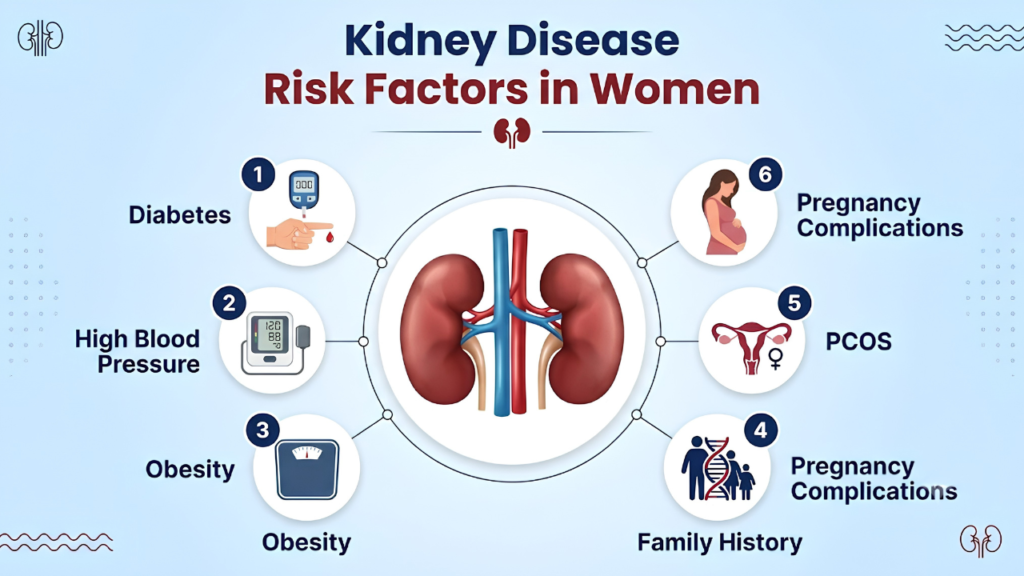
Understanding kidney disease risk factors in women is useful because early kidney problems are not always obvious. Regular testing becomes particularly valuable when one or more risk factors are present.
Diabetes is one of the major causes of kidney damage because persistently high blood sugar can gradually affect the kidneys’ filtering system. High blood pressure can also damage the small blood vessels within the kidneys over time.
Other factors that may increase risk include:
- Obesity – which is associated with a higher risk of diabetes, high blood pressure, and other conditions that can affect kidney health.
- Family history of kidney disease – particularly when close relatives have had inherited or long-term kidney problems.
- PCOS – which does not directly mean a woman will develop kidney disease, but may be associated with metabolic issues such as insulin resistance, obesity, diabetes, and high blood pressure.
- Pregnancy-related conditions – including preeclampsia, which involve high blood pressure and require careful medical follow-up.
- Autoimmune conditions such as lupus – which are more common in women and can directly affect the kidneys.
- Recurrent UTIs or kidney infections – which should be properly evaluated when infections are frequent or complicated.
Having a risk factor does not mean kidney disease is inevitable. It means kidney health deserves appropriate monitoring.
Are Kidney Disease Symptoms Different in Females?
The main symptoms of kidney disease are broadly similar in females and males. Changes in urination, swelling, fatigue, and abnormal urine findings are not exclusive to either sex. The difference is often in how easily those symptoms can be recognised and interpreted.
Women experience urinary tract infections more frequently, partly because of anatomical differences in the urinary tract. Burning, urgency, and changes in urination may therefore be assumed to be another UTI, even when symptoms persist or the underlying problem is different.
Hormonal changes can also complicate the picture. Fatigue, changes in fluid retention, and general discomfort may be attributed to menstruation, pregnancy, menopause, or other hormonal factors.
Pregnancy deserves particular attention because kidney function and blood pressure are closely monitored during this period. Conditions such as preeclampsia can affect maternal health and may require follow-up after pregnancy.
Women with autoimmune diseases also need individual assessment because conditions such as lupus can directly affect the kidneys. So, the symptoms themselves are not necessarily unique. The context around them often is, which can make kidney disease easier to miss without appropriate testing.
Kidney Infection Symptoms in Females: How Are They Different?
Kidney infection symptoms in females usually have a different pattern from chronic kidney disease. A kidney infection is generally an acute problem, often developing when bacteria from a urinary tract infection travel upward and reach the kidneys.
Symptoms may include:
- Fever or chills
- Pain in the back or side
- Burning or pain while urinating
- A strong or urgent need to urinate
- Cloudy or unusually strong-smelling urine
- Nausea or vomiting
These symptoms can develop relatively quickly and often make a person feel unwell.
Chronic kidney disease, by contrast, usually develops gradually. Early stages may cause no obvious symptoms at all. When symptoms do develop, they are more likely to relate to changes in kidney function, fluid balance, or the presence of protein or blood in the urine.
The two conditions should not be confused. A suspected kidney infection requires timely medical assessment because untreated infections can become serious. Fever with back or side pain and urinary symptoms should be evaluated promptly rather than managed through self-diagnosis.
How Is Kidney Disease Diagnosed?
Symptoms can raise concern, but kidney disease is diagnosed through medical evaluation and testing. A blood test is commonly used to measure creatinine, a waste product that the kidneys normally filter from the blood.
The estimated glomerular filtration rate, or eGFR, is calculated using relevant clinical information and helps assess how well the kidneys are filtering. A urine test can identify protein, blood, and other abnormalities that may point to kidney damage.
An ultrasound may be recommended to examine the size and structure of the kidneys and identify certain physical abnormalities or urinary tract problems.
How often testing is needed depends on individual risk. Women with diabetes, persistent high blood pressure, autoimmune disease, a family history of kidney disease, or previous pregnancy-related complications should discuss an appropriate testing schedule with their doctor rather than waiting for symptoms to appear.
When Should You See a Kidney Specialist?
A kidney specialist should be consulted when symptoms persist, kidney tests are abnormal, or there are significant risk factors for kidney disease.
Consider specialist evaluation for:
- Persistent or unexplained swelling
- Repeatedly foamy urine
- Blood in the urine
- Ongoing changes in urination
- Abnormal creatinine, eGFR, or urine test results
- Difficult-to-control blood pressure
- Diabetes or a strong family history of kidney disease
Urgent medical attention is needed for severe shortness of breath, a major reduction in urine output, severe swelling, or symptoms suggesting a significant kidney infection, such as fever with back or side pain and vomiting.
Early assessment does not always mean serious kidney disease is present. It helps identify the cause and decide what follow-up is actually needed.
Frequently Asked Questions About Kidney Disease Symptoms in Females
Q1.What are the first signs of kidney disease in women?
Ans-There is not always a clear first symptom because early kidney disease often develops silently. Subtle changes such as unexplained tiredness, mild puffiness, or altered urination patterns may be noticed, but many women have no obvious symptoms. Blood and urine testing is the most reliable way to identify early kidney problems.
Q2.Can kidney disease cause frequent urination in females?
Ans-Changes in urination frequency can occur with kidney problems, although frequent urination has many other possible causes. Urinary tract infections, pregnancy, increased fluid intake, and some metabolic conditions can also contribute. Persistent changes, particularly with abnormal urine, swelling, or fatigue, should be medically assessed.
Q3.Does foamy urine always mean kidney disease?
Ans-No. Occasional bubbles in urine are common and do not necessarily indicate a kidney problem. Persistent or unusually foamy urine, however, can be associated with protein leaking into the urine. A urine test can help determine whether protein is present and whether further kidney evaluation is needed.
Q4.What are kidney infection symptoms in females?
Ans-Kidney infection symptoms often include fever, chills, pain in the back or side, burning while urinating, and an urgent need to pass urine. These symptoms usually develop more suddenly than chronic kidney disease. Fever combined with urinary symptoms and back pain should be evaluated promptly.
Q5.Does PCOS increase the risk of kidney disease?
Ans-PCOS does not automatically cause kidney disease. However, some women with PCOS have a higher likelihood of insulin resistance, obesity, diabetes, or high blood pressure, which can affect kidney health over time. Regular monitoring of these related health risks can help identify problems early.
Q6.Who should get regular kidney function tests?
Ans-Women with diabetes, high blood pressure, autoimmune conditions such as lupus, a family history of kidney disease, or certain pregnancy-related complications should discuss regular kidney testing with their doctor. The appropriate frequency depends on individual health risks and previous test results.
Conclusion
Kidney disease symptoms in females are not always obvious, especially during the early stages. Persistent changes in urination, abnormal urine, swelling, ongoing fatigue, or difficult-to-control blood pressure deserve proper evaluation, particularly when kidney disease risk factors are present.
The goal is not to assume that every symptom signals kidney disease. It is to avoid overlooking persistent changes that warrant testing. Early blood and urine tests can provide useful answers and help guide the next steps.
If you have concerns about your kidney health, Dr. Sashidhar CH, Nephrologist in Hyderabad with over 20 years of clinical experience, can provide a detailed kidney evaluation and personalised guidance. Book a consultation for early diagnosis, appropriate testing, and ongoing kidney care based on your individual needs.
Medically reviewed by Dr. Sashidhar CH, Nephrologist, Hyderabad | 20+ Years of Experience