
Your kidneys work silently every minute of the day, filtering nearly 180 liters of blood, removing toxins, balancing fluids, regulating blood pressure, and producing hormones essential for healthy bones and red blood cells. Yet, despite performing these life-sustaining functions, kidney disease often develops without obvious symptoms.
Kidney disease often develops silently, with very few noticeable symptoms in its early stages. Recognizing the early signs of kidney disease can help you seek timely treatment and prevent permanent kidney damage.
The good news? Your body often sends subtle warning signs long before kidney failure develops. Recognizing these symptoms early and seeking timely medical care can slow or even prevent disease progression.
Here are ten early signs of kidney disease that you should never ignore.
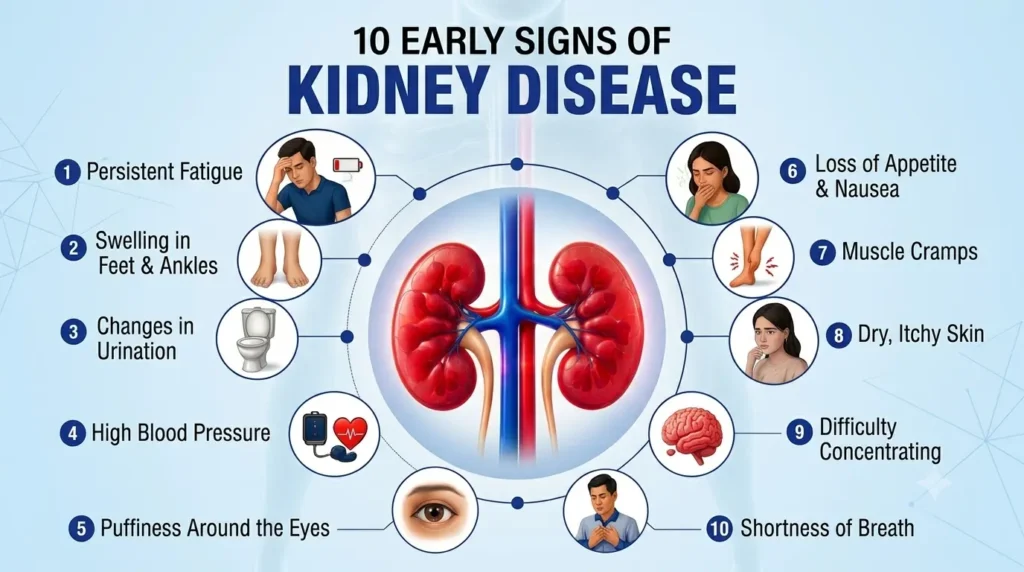
1. Persistent Fatigue and Weakness
Feeling unusually tired despite getting enough rest may be one of the earliest indicators of kidney dysfunction.
Healthy kidneys produce a hormone called erythropoietin, which stimulates the production of red blood cells. When the kidneys become damaged, this hormone production decreases, leading to anemia.
Anemia reduces oxygen delivery throughout the body, causing:
- Constant tiredness
- Lack of energy
- Difficulty concentrating
- Dizziness
- Reduced exercise tolerance
Many people mistake this fatigue for stress or aging, delaying diagnosis.
2. Swelling in Feet, Ankles, Hands, or Face
One of the kidneys’ primary jobs is removing excess fluid from the body.
When kidney function declines, fluid begins accumulating in tissues, leading to swelling (edema), particularly in:
- Feet
- Ankles
- Legs
- Hands
- Eyelids
- Face
If swelling persists or worsens, especially without an obvious reason, it deserves medical evaluation.
3. Changes in Urination
Since kidneys produce urine, changes in urinary habits often indicate early kidney problems.
Watch for:
- Increased urination at night
- Reduced urine output
- Foamy or bubbly urine
- Blood in urine
- Dark-colored urine
- Difficulty passing urine
- Pain while urinating
Foamy urine may suggest protein leakage, while blood in urine may indicate inflammation, stones, infection, or kidney disease.
4. High Blood Pressure That Is Difficult to Control
The relationship between kidneys and blood pressure works both ways.
High blood pressure can damage kidney blood vessels, while damaged kidneys can also cause hypertension by disrupting fluid and hormone balance.
If your blood pressure remains elevated despite medication, your kidneys should be evaluated.
In many patients, uncontrolled hypertension is the first clue that kidney disease is developing.
5. Puffiness Around the Eyes
Many people notice swelling around their eyes first thing in the morning.
Persistent puffiness may indicate that proteins are leaking into the urine because damaged kidneys cannot retain essential proteins properly.
This condition, known as proteinuria, is often one of the earliest measurable signs of kidney disease.
6. Loss of Appetite and Nausea
As kidneys lose their filtering ability, waste products accumulate in the bloodstream.
This buildup can lead to:
- Poor appetite
- Metallic taste in the mouth
- Nausea
- Vomiting
- Weight loss
Many patients notice that foods they previously enjoyed suddenly taste different or become unappealing.
7. Muscle Cramps
Healthy kidneys regulate important electrolytes like:
- Calcium
- Potassium
- Sodium
- Phosphorus
- Magnesium
Kidney dysfunction disrupts this balance, increasing the likelihood of:
- Night-time leg cramps
- Muscle spasms
- Weak muscles
- Tingling sensations
Frequent unexplained muscle cramps should not be ignored.
8. Dry, Itchy Skin
Healthy kidneys help maintain mineral balance and remove toxins from the blood.
When they stop functioning efficiently:
- Waste products accumulate
- Skin becomes dry
- Persistent itching develops
- Skin may appear rough or flaky
This itching often doesn’t improve with moisturizers because the underlying cause is internal rather than external.
9. Difficulty Concentrating
Reduced kidney function can lead to anemia and toxin buildup, both of which affect brain function.
People with early kidney disease often report:
- Brain fog
- Memory problems
- Difficulty focusing
- Reduced mental clarity
- Poor productivity
These symptoms are frequently overlooked or attributed to stress.
10. Shortness of Breath
Kidney disease can contribute to breathlessness through two mechanisms:
Extra fluid can accumulate in the lungs, making breathing difficult.
Reduced red blood cells mean less oxygen reaches body tissues, causing breathlessness even during mild activity.
If shortness of breath occurs alongside swelling or fatigue, kidney evaluation becomes especially important.
Who Is at Higher Risk?
Certain individuals are significantly more likely to develop chronic kidney disease.
Risk factors include:
- Diabetes
- High blood pressure
- Family history of kidney disease
- Obesity
- Smoking
- Heart disease
- Age above 60 years
- Frequent use of painkillers (NSAIDs)
- Recurrent kidney stones
- Autoimmune diseases
If you have one or more of these risk factors, regular kidney screening is strongly recommended.
How Is Kidney Disease Diagnosed?
Fortunately, kidney disease can often be detected with simple tests.
Your nephrologist may recommend:
- Blood tests (Serum Creatinine)
- Estimated Glomerular Filtration Rate (eGFR)
- Urine routine examination
- Urine Albumin-to-Creatinine Ratio (ACR)
- Blood pressure measurement
- Kidney ultrasound
- Electrolyte profile
These tests help determine both kidney function and the underlying cause of damage.
Can Kidney Disease Be Prevented?
While not all kidney diseases are preventable, many cases can be delayed or avoided through healthy lifestyle habits.
Protect your kidneys by:
- Keeping blood sugar under control
- Managing blood pressure
- Drinking adequate water
- Exercising regularly
- Maintaining a healthy weight
- Avoiding unnecessary painkiller use
- Limiting salt intake
- Quitting smoking
- Limiting alcohol consumption
- Getting regular kidney checkups if you’re at high risk
Early intervention is often the key to preserving kidney function.
When Should You See a Nephrologist?
Consult a nephrologist if you experience:
- Persistent swelling
- Blood in urine
- Foamy urine
- High blood pressure that is difficult to control
- Unexplained fatigue
- Recurrent kidney stones
- Declining kidney function on blood tests
- Diabetes with abnormal urine protein (https://drsashidharch.com/diabetic-kidney-disease/)
- Family history of kidney disease
Early specialist care can significantly reduce the risk of kidney failure and the need for dialysis.
Final Thoughts
Kidney disease rarely appears overnight. It develops gradually, often without causing pain or dramatic symptoms. By paying attention to subtle warning signs such as fatigue, swelling, urinary changes, high blood pressure, and persistent itching, you can detect problems before irreversible damage occurs.
Your kidneys work around the clock to keep your body healthy. Giving them the attention they deserve through regular checkups, healthy habits, and timely medical care can protect your health for years to come.
Remember: Early detection saves kidney function and in many cases, it can save lives.
Consult Dr. Sashidhar – Expert Nephrologist in Hyderabad
If you experience persistent swelling, fatigue, blood in urine, foamy urine, or uncontrolled blood pressure, consult an experienced nephrologist without delay. Early diagnosis and timely treatment can help protect your kidney function and improve long-term health.
Dr. Sashidhar specializes in the diagnosis and management of chronic kidney disease (CKD), diabetic kidney disease, kidney stones, hypertension, and other kidney disorders using evidence-based treatment approaches.