
Reviewed by Dr. Sashidhar CH, MBBS, MD General Medicine, DNB Nephrology, Senior Consultant Nephrologist, Hyderabad |
A relative suggests a herbal kidney cleanse. Someone else swears by a kadha or a special juice. Or maybe your latest blood report shows a slightly high creatinine, and now you’re wondering: what are some home remedies for kidney health that actually work?
It’s a fair question, and the honest answer is a little different from what most websites promise. Daily habits like staying hydrated, eating a balanced diet, keeping blood pressure and blood sugar under control and staying active can support your kidneys. But supporting healthy kidneys is one thing. Treating kidney disease is another, and no home remedy can do that.
Can Home Remedies Really Support Kidney Health?
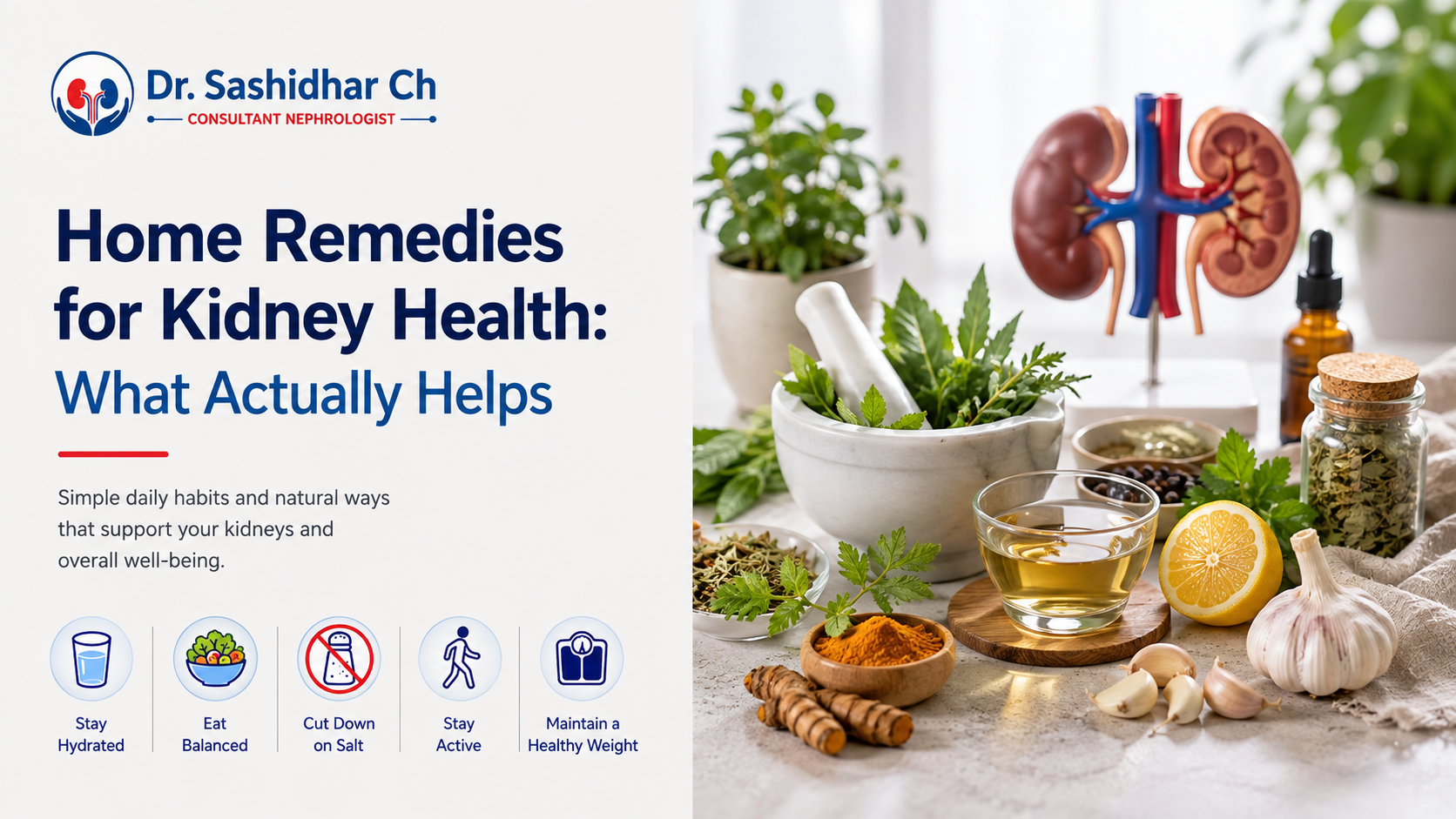
Yes, healthy daily habits can support kidney health, but home remedies cannot treat or replace medical care for kidney disease. The most useful “remedies” are ordinary habits: balanced food, sensible hydration, regular activity, a healthy weight, and good control of blood pressure and blood sugar.
It’s tempting to look for one drink, herb or food that will “clean” the kidneys. Your kidneys already filter waste and extra fluid from your blood all day long. No proven home cleanse can do that job for them or repair them once they’re damaged.
If your kidneys are healthy, the goal is to protect them over the years. If you already have kidney disease, diabetes, high blood pressure or abnormal kidney tests, your plan needs to be personal to you. The better question, then, is which everyday habits reduce the strain on your kidneys.
5 Everyday Habits That Support Kidney Health
1. Stay Properly Hydrated
Enough fluid helps your body work normally. It matters most when you’re losing water through vomiting, diarrhoea, fever or heavy sweating.
But “more water is always better” isn’t true for everyone. People with advanced kidney disease, some heart conditions or swelling, and those on dialysis may have a fluid limit. Drinking litres of water on your own in those situations can do harm.
For most people, the practical version is simple: drink regularly through the day, and take extra care when you’re ill or sweating a lot.
2. Follow a Kidney-Friendly Diet
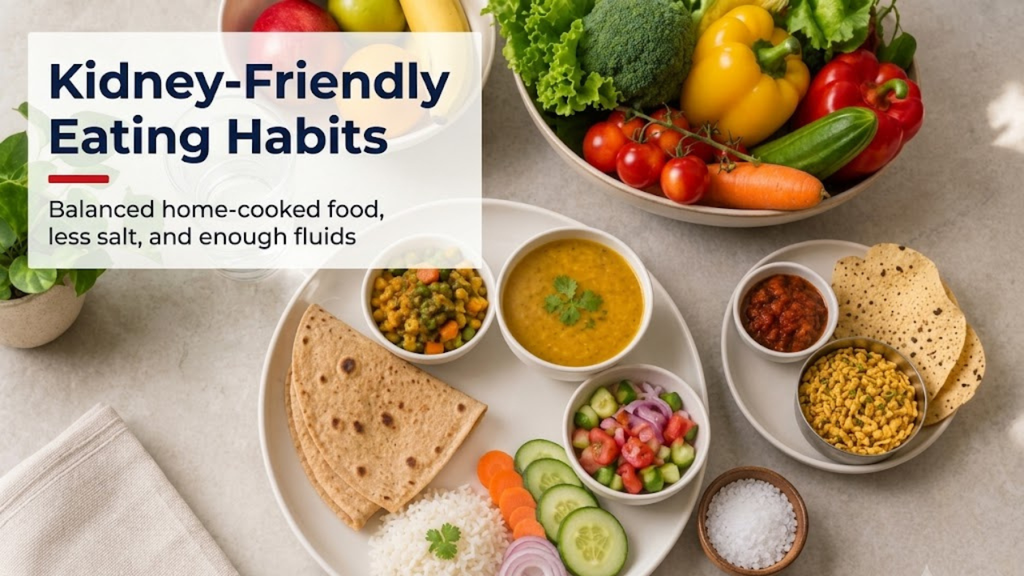
A balanced diet built mostly on home-cooked food supports both your kidneys and your heart. Vegetables, suitable fruits, whole grains and sensible portions of protein all have a place.
Indian meals fit this well. Dal, roti, sabzi and other home-cooked dishes can all work, depending on your overall health and kidney function.
Once kidney disease enters the picture, though, the rules change. Some people need limits on potassium, phosphorus, protein or sodium, and those limits depend on blood tests, medicines and other conditions. A food that suits one person can be a problem for another, which is why a nephrologist or renal dietitian should guide any big dietary change.
3. Cut Down on Excess Salt
Too much sodium makes blood pressure harder to control, and high blood pressure is a major cause of kidney damage.
The salt shaker is only part of it. In an Indian diet, a lot of salt hides in pickles, papad, namkeen, instant noodles, sauces and packaged snacks. Taste your food before you add salt, choose fresh food more often, and read labels on packaged products when you can.
4. Stay Physically Active
Regular activity helps with blood pressure, blood sugar, weight and heart health, all of which affect your kidneys. You don’t need a hard workout. Walking, cycling, swimming or any moderate activity that suits your age and health is enough.
If you have kidney disease, a heart condition or significant weakness, check what level of activity is right for you. KDIGO guidance encourages physical activity for people with CKD, adjusted to their health and ability.
5. Maintain a Healthy Weight
Extra body weight raises the risk of high blood pressure and diabetes, and both strain the kidneys. A healthy weight comes from small, steady changes in food and movement, not from a crash diet.
If you have kidney disease, get professional advice before starting a high-protein or extreme weight-loss plan. Your nutritional needs may be quite different.
Control Blood Pressure and Blood Sugar
If you want natural ways to keep your kidneys healthy, start here. High blood pressure damages the blood vessels and filters inside the kidneys. Long-term high blood sugar does the same. Together they are among the leading causes of chronic kidney disease.
That’s why a regular blood pressure check and good diabetes control often do more for your kidneys than any cleanse drink. If your doctor has prescribed medicines for either condition, keep taking them as directed. Lifestyle changes work best alongside treatment, not instead of it.
If you have diabetes, ask whether you need regular kidney tests. Blood and urine tests can pick up a problem long before symptoms appear.
Be Careful With Painkillers, Herbal Products and Supplements
Some everyday products deserve a second look before you take them.
NSAIDs (nonsteroidal anti-inflammatory drugs) are a common group of painkillers. Frequent use can harm the kidneys, especially if you’re dehydrated or already have kidney disease. NIDDK advises talking to a healthcare professional about over-the-counter medicines when kidney risk is a concern.
“Natural” doesn’t automatically mean safe. Herbal and Ayurvedic products can interact with prescription medicines, contain ingredients that aren’t clearly listed, or carry risks when kidney function is reduced. Be cautious with:
- Kidney cleanse teas
- Detox powders
- Herbal kidney supplements
- Special juices or mixtures
- Unregulated “kidney support” products
You may also have heard that barley water, coconut water, giloy or a home-made kadha is good for the kidneys. The honest answer is that the evidence varies, and safety depends on the person. Coconut water, for example, contains potassium, which can be a problem when kidney function is low. Herbal mixtures can interact with medicines. If you have kidney disease, check with your nephrologist before adding any of these.
Tell your doctor about every medicine, vitamin, herbal product and supplement you take. If you go to the gym, ask before using protein powder, creatine or pre-workout products, especially if you have any kidney concern.
Natural Ways to Keep Your Kidneys Healthy (Daily Habits)
A few more habits help, and none of them needs a special product.
Sleep. Poor sleep makes blood pressure and blood sugar harder to manage. Keep a regular schedule, and mention long-running sleep problems to your doctor.
Smoking. Smoking damages blood vessels all over the body, including those that supply the kidneys. If you smoke, quitting benefits your heart and your kidneys.
Alcohol. If you drink, keep it moderate. Your doctor may advise avoiding alcohol completely, depending on your health and medicines.
Stress. Long-term stress makes healthy habits harder to keep. Walking, breathing exercises, meditation or a hobby you enjoy can help.
These habits sound ordinary, and that’s the point. Looking after your kidneys rarely needs anything expensive.
Kidney Care as You Age
Kidney function changes naturally with age, and older adults often manage more health conditions and more medicines at the same time.
Two things deserve attention. Older adults can become dehydrated faster, and taking several medicines together can add load on the kidneys. Ask your doctor to review all your medicines once a year, including painkillers and supplements. If you have diabetes or high blood pressure, ask how often your kidney tests should be repeated.
Bring up kidney health at your next checkup, even if you feel fine. Early kidney disease often causes few or no symptoms, so a test can find a problem sooner than you’d notice it yourself.
Warning Signs You Shouldn’t Ignore
Kidney problems can stay quiet for a long time. Still, some changes deserve medical attention. See a doctor if you notice:
- Swelling around the feet, ankles or face
- Changes in how often you urinate
- Persistent foamy urine
- Ongoing, unexplained tiredness
- Blood in the urine
- Blood pressure that stays hard to control
- Abnormal kidney-related blood or urine test results
One of these symptoms doesn’t mean you have kidney disease. Many other things can cause them. But it’s better to find the cause than to treat it yourself. And if you have diabetes or high blood pressure, remember that healthy-feeling kidneys aren’t proof of healthy kidneys, since kidney disease can develop quietly.
When Should You See a Nephrologist?
Consider seeing a nephrologist if you have diabetes, high blood pressure, a family history of kidney disease, abnormal kidney test results, or symptoms that could point to a kidney problem.
Depending on your situation, your doctor may suggest:
- Blood pressure measurement
- Serum creatinine, a blood test used to assess kidney function
- eGFR, an estimate of how well your kidneys are filtering blood
- Urine tests, including the urine albumin-to-creatinine ratio (ACR), which detects albumin leaking into urine
Nobody needs every test at every visit. Which tests you need, and how often, depends on your health, past results and risk factors.
If you’re worried about your kidney function, you can learn more about Dr. Sashidhar CH’s kidney care services or talk to a nephrologist about the right tests for you.
Can Home Remedies Treat or Reverse Kidney Disease?
Let’s be clear about this one.
Healthy habits can protect kidney function and may lower the risk of further problems. But home remedies cannot be relied on to treat chronic kidney disease or other established kidney conditions.
Some kidney problems do improve once the underlying cause is found and treated. Bringing uncontrolled blood pressure or diabetes under control can protect kidney function, for example. But established kidney damage may not fully reverse, and no home remedy has been proven to cure chronic kidney disease.
So if you searched for home remedies for kidney health, look for habits that support your overall health, not products that promise to flush, detox or repair your kidneys. And if you’ve already been diagnosed with kidney disease, keep your prescribed treatment going. Talk to your nephrologist about any diet change, herbal product or supplement before you try it.
Frequently Asked Questions
Is drinking more water always good for the kidneys?
Adequate hydration helps most people, but it isn’t right for everyone. Those with advanced kidney disease, some heart conditions, swelling or dialysis may need a fluid limit, and drinking large amounts can be harmful for them. Your doctor can tell you how much fluid suits your condition.
Which foods are good for kidney health?
A balanced diet of mostly home-cooked, minimally processed food supports overall health. If you have kidney disease, you may need personal limits on sodium, potassium, phosphorus or protein. A food that suits one person may not suit another, so ask your nephrologist or renal dietitian for individual advice.
Can exercise improve kidney health?
Regular activity supports things that matter for your kidneys, including blood pressure, blood sugar, weight and heart health. Walking and other moderate exercise suits many people. With kidney disease or another medical condition, your healthcare professional can help you pick a safe level of activity.
Can home remedies reverse kidney disease?
No home remedy has been proven to reverse established chronic kidney disease. Some kidney problems improve when their cause is treated, but the outcome depends on the condition and how much damage has occurred. Talk to your doctor before replacing any prescribed treatment with a home remedy.
Are herbal kidney cleanses safe?
Often they aren’t, or at least nobody can promise they are. Herbal and “cleanse” products may contain ingredients that interact with medicines or add risk when kidney function is reduced. A “natural” label doesn’t prove safety. Discuss any herbal product or supplement with your doctor before taking it.
How can I keep my kidneys healthy naturally?
Stick to practical habits: a healthy weight, sensible hydration, balanced food, less salt, regular activity, no smoking, enough sleep, and good control of blood pressure and blood sugar. If you have kidney disease, adapt these steps to your medical needs with your doctor’s help.
Conclusion
If you’re looking for home remedies for kidney health, start with the basics rather than a detox product or a special supplement. Sensible hydration, balanced food, less salt, regular activity, a healthy weight and good control of blood pressure and blood sugar will take you much further.
If you have symptoms, abnormal kidney tests, diabetes, high blood pressure or a family history of kidney disease, get personal medical advice. Your kidneys may need more than home care, and finding a problem early makes a real difference. If you’d like personalised advice, you can book a consultation with Dr. Sashidhar CH.
Medical Disclaimer: This article is for general educational information only. It does not replace a medical consultation, diagnosis or treatment. Kidney disease and dietary needs vary from person to person. Speak with a qualified healthcare professional for advice specific to your condition.