
Reviewed by Dr. Sashidhar CH, MBBS, MD General Medicine, DNB Nephrology, Senior Consultant Nephrologist, Hyderabad
You’ve just been told you have stage 3 kidney disease, and naturally, the first question may be, “How serious is it? Will my kidneys keep getting worse?”
If that’s what you’re worried about, take a breath. Stage 3 kidney disease means your kidneys have a moderate reduction in filtering ability, but it does not mean you have kidney failure or that dialysis is automatically needed.
In this article, we’ll explain what stage 3 CKD means, the difference between stage 3a and stage 3b kidney disease, what symptoms you may notice, which complications doctors watch for, and how stage 3 kidney disease treatment is planned. We’ll also discuss the tests you may need and what you can do to protect your remaining kidney function.
What Is Stage 3 Kidney Disease?
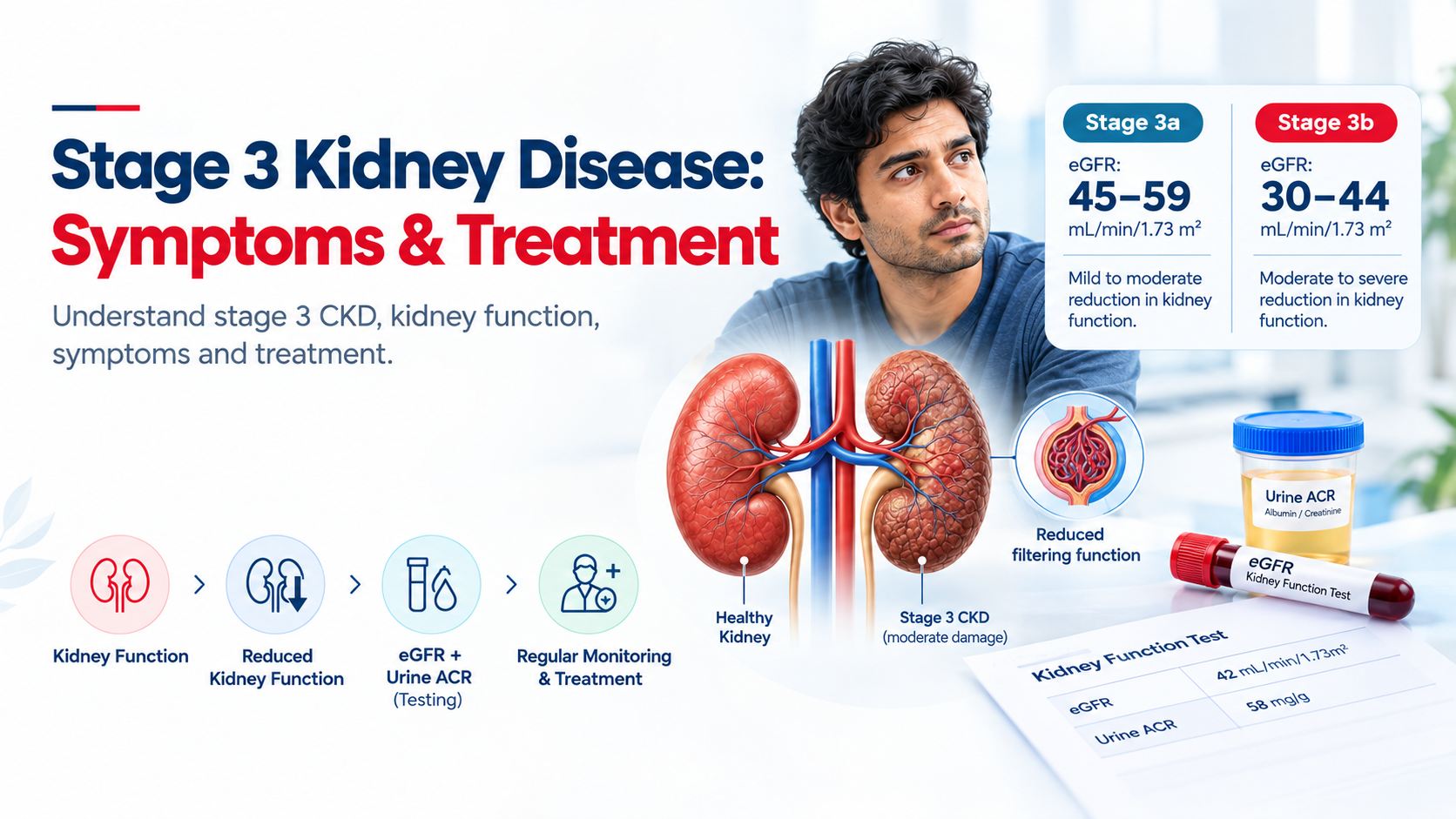
Featured snippet answer: Stage 3 kidney disease is chronic kidney disease with a moderately reduced level of kidney function. It is generally divided into stage 3a, with an eGFR of 45–59, and stage 3b, with an eGFR of 30–44 mL/min/1.73 m². CKD is confirmed when reduced kidney function or other evidence of kidney damage persists for at least three months.
The kidneys filter waste products and extra fluid from your blood. They also help maintain the right balance of minerals, support blood pressure control, and contribute to healthy red blood cell production and bones.
In stage 3 CKD, this filtering ability is reduced. Doctors usually assess it using a blood test called estimated glomerular filtration rate (eGFR).
Stage 3 covers an eGFR from 30 to 59 mL/min/1.73 m² and is divided into two groups:
- Stage 3a: eGFR 45–59
- Stage 3b: eGFR 30–44
A single low eGFR doesn’t necessarily prove that you have chronic kidney disease. Your doctor looks at previous results, urine tests, your medical history, and whether the abnormality has persisted over time.
Stage 3a vs Stage 3b Kidney Disease
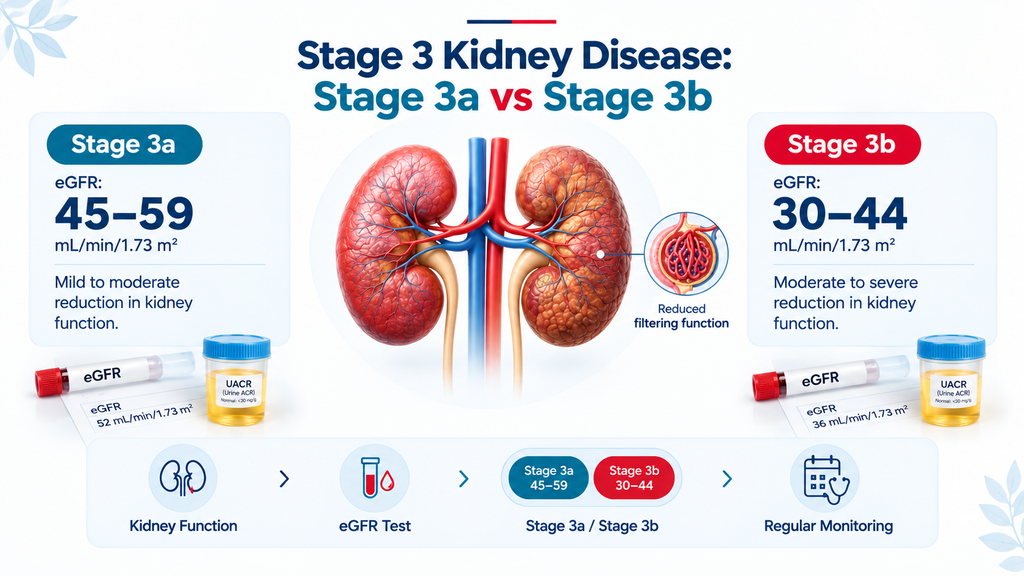
Both are part of stage 3 CKD, but stage 3b represents a greater reduction in kidney function.
| CKD stage | eGFR | What it means |
|---|---|---|
| Stage 3a | 45–59 | Mild to moderate reduction in kidney function |
| Stage 3b | 30–44 | Moderate to severe reduction in kidney function |
These numbers are useful, but your eGFR isn’t the whole picture.
Doctors also look at urine albumin, usually measured with a urine albumin-to-creatinine ratio (ACR or UACR). Albumin is a protein that normally stays in your blood. When damaged kidneys allow more albumin to pass into urine, it can provide additional information about kidney damage and future risk.
So, two people with the same eGFR may not have exactly the same outlook. The underlying cause, urine albumin level, blood pressure, diabetes control and changes in kidney function over time all matter.
What Does Stage 3 Kidney Function Mean?
When people search for stage 3 kidney function, they often want to know how much kidney function they have left.
It isn’t quite accurate to say that an eGFR of 40 means your kidneys are working at exactly 40% capacity. eGFR is an estimate of filtration and isn’t a direct percentage measurement of how much kidney tissue is functioning.
Your doctor will look at the number as part of the wider picture rather than treating it as a score by itself.
What Happens to Kidney Function in Stage 3?
As kidney function falls, the kidneys become less efficient at filtering waste and maintaining the balance of fluid and minerals in the body.
Think of your kidneys like a household water-filtering system. If the filter becomes less efficient, it may still work, but it needs to handle the same amount of work with less filtering capacity.
This doesn’t mean that every person with stage 3 CKD will continue to lose kidney function quickly. Some people remain stable for years, while others progress more quickly. The cause of CKD and factors such as high blood pressure, diabetes, increasing urine albumin and falling eGFR can influence progression.
That’s why your doctor is interested in the trend, not just today’s creatinine or eGFR result.
For example, an eGFR that has remained around the same level over several tests may tell a different story from an eGFR that has been steadily falling.
Symptoms of Stage 3 CKD
One of the confusing things about stage 3 CKD is that you may feel completely normal.
Many people with CKD don’t have noticeable symptoms in the early stages. Kidney disease is often found through routine blood and urine tests rather than because a person feels unwell.
Some people may experience:
- Feeling unusually tired or low in energy
- Swelling around the feet, ankles or legs
- Changes in how often they urinate
- Foamy urine, particularly when significant protein is present
- Muscle cramps
- Itching or dry skin
- Changes in appetite
Some people also report back or flank discomfort, but this isn’t a specific sign of stage 3 CKD. Back pain has many possible causes and should not automatically be blamed on the kidneys.
Likewise, having no symptoms doesn’t mean your kidney function is normal. Blood and urine tests remain important.
Complications to Watch For
Stage 3 CKD doesn’t mean complications are guaranteed. However, your doctor may monitor for problems that can become more common as kidney function decreases.
Anemia
Healthy kidneys help support red blood cell production. With CKD, some people develop anemia, which can contribute to tiredness, weakness or reduced exercise tolerance.
High blood pressure
High blood pressure can contribute to kidney damage, and kidney disease can also make blood pressure harder to control. Keeping blood pressure under control is an important part of kidney care.
Bone and mineral problems
The kidneys help maintain the balance of minerals involved in bone health. CKD can affect this balance, so your doctor may order additional blood tests when appropriate.
Heart and blood vessel risk
CKD is associated with a higher risk of cardiovascular problems. This is one reason kidney treatment isn’t only about protecting the kidneys. Managing blood pressure, diabetes, cholesterol and other cardiovascular risk factors also matters.
Stage 3 Kidney Disease Treatment
There isn’t one treatment plan that fits everyone with stage 3 CKD.
The right stage 3 kidney disease treatment depends on why your kidneys are affected, your eGFR, urine albumin, blood pressure, diabetes status, other medical conditions and whether your kidney function is stable.
Control blood pressure
Good blood pressure control is one of the main ways doctors work to protect kidney function.
If you have albumin in your urine, your nephrologist may consider medicines that reduce blood pressure and kidney stress. The choice depends on your individual situation.
Manage diabetes if you have it
High blood sugar over time can damage the kidney’s filtering structures. If diabetes is contributing to your CKD, your healthcare team will work with you on appropriate glucose control.
Review your medicines
Some medicines can require dose adjustments when kidney function is reduced.
Painkillers from the NSAID group can also affect kidney function in some situations. Don’t regularly take these medicines for pain without checking with your doctor, especially if you already have CKD.
Your nephrologist can review your prescription medicines, over-the-counter medicines and supplements.
Follow a suitable diet
You don’t necessarily need to stop eating every food you associate with kidney disease.
For many patients, reducing excess salt is helpful. Your doctor or renal dietitian may also advise you about protein, potassium and phosphorus depending on your kidney function and blood test results.
For an Indian diet, this may mean reviewing the amount and frequency of foods such as:
- Pickles and papad
- Packaged snacks and salty foods
- Large portions of dal or other protein-rich foods
- Certain high-potassium foods if your potassium is elevated
- Processed foods containing added phosphorus
Even foods such as coconut water shouldn’t automatically be labelled “good” or “bad” for every kidney patient. Potassium levels and the rest of your diet matter.
Stay appropriately hydrated
Don’t force yourself to drink excessive amounts of water simply because you have kidney disease.
Some patients need adequate fluid intake, while others may need fluid restrictions because of swelling, heart problems or more advanced kidney disease. Follow the amount recommended for your condition.
Keep physically active
Regular physical activity can support blood pressure, blood sugar, cardiovascular health and overall fitness. Your activity level should match your age, health and physical ability.
Stop smoking
If you smoke, stopping can benefit your overall cardiovascular and kidney health.
Keep your kidney tests on track
Regular monitoring allows your doctor to see whether your kidney function and urine albumin are stable or changing. NIDDK identifies eGFR and urine albumin as key markers for monitoring CKD.
Can Stage 3 Kidney Disease Be Reversed or Stopped from Progressing?
This is one of the first questions many patients ask.
The honest answer is: it depends on the cause.
Some situations can cause a temporary fall in kidney function, while established chronic kidney damage may not return completely to normal. The goal is often to identify the cause, treat what can be treated, protect the remaining kidney function and reduce the risk of further damage.
Not everyone with stage 3 CKD progresses to kidney failure. Some people remain stable for many years. Others experience faster progression, particularly when important risk factors aren’t controlled.
So don’t look at a stage 3 diagnosis as a prediction of what will definitely happen to you.
What matters now is understanding why your kidney function is reduced and what can be done about it.
How Often Should You Get Tested?
There isn’t one testing schedule for every person with stage 3 CKD.
Your nephrologist may recommend repeat testing more frequently when your kidney function is changing, urine albumin is high, blood pressure is difficult to control, or you have another condition such as diabetes.
Tests may include:
- Serum creatinine and eGFR: to assess kidney filtration
- Urine ACR/UACR: to check for albumin leakage
- Blood pressure: to monitor an important kidney risk factor
- Potassium and other electrolytes: when appropriate
- Hemoglobin: to check for anemia
- Calcium, phosphorus and related tests: when clinically indicated
- Blood sugar or HbA1c: if you have diabetes
- Other tests depending on the suspected cause of CKD
Your doctor may also compare several results over time rather than making decisions from one report. Urine albumin is particularly useful for monitoring kidney damage and response to treatment.
When Should You See a Nephrologist?
If you’ve been told that you have stage 3 CKD, discussing the result with a nephrologist can help you understand the cause, your risk factors and what should be monitored.
You should seek medical attention sooner if you develop symptoms such as:
- New or worsening swelling
- Significant changes in urination
- Persistent vomiting
- Severe weakness or unusual drowsiness
- Breathlessness
- Chest discomfort
- A sudden change in your health along with an abnormal kidney blood test
A nephrologist can assess your kidney function, urine results, blood pressure and medical history and create a management plan suited to you.
For patients looking for specialist kidney care in Hyderabad, you can explore Dr. Sashidhar CH’s kidney care services, including care related to chronic kidney disease and other kidney conditions.
Frequently Asked Questions
Is stage 3 kidney disease serious?
Stage 3 kidney disease means kidney function is moderately reduced, but it is not the same as kidney failure. The level of concern depends on your eGFR, urine albumin, underlying cause and whether kidney function is stable or falling. Regular monitoring and appropriate treatment can help manage the condition and reduce complications.
Can you live a normal life with stage 3 CKD?
Many people with stage 3 CKD continue working, travelling and enjoying their usual activities. Your lifestyle may need some adjustments based on your kidney function, blood pressure, diabetes, diet and other health conditions. Regular follow-up is important so changes can be identified early rather than waiting for symptoms.
What is stage 3a kidney disease?
Stage 3a kidney disease refers to CKD with an eGFR of 45–59 mL/min/1.73 m² that persists for at least three months when used as the basis for CKD classification. It represents a mild to moderate reduction in kidney function. Doctors also consider urine albumin and the underlying cause when assessing risk.
What is stage 3b kidney disease?
Stage 3b kidney disease refers to CKD with an eGFR of 30–44 mL/min/1.73 m² that persists for at least three months. It represents a greater reduction in kidney function than stage 3a. Your doctor will consider the eGFR trend, urine albumin and cause of CKD when planning follow-up and treatment.
Should you avoid protein completely in stage 3 CKD?
No. Avoiding protein completely isn’t appropriate. The right amount depends on your kidney function, nutritional needs, body size and other health conditions. Your nephrologist or renal dietitian can help you choose suitable portions and protein sources instead of removing protein from your diet without medical advice.
Does stage 3 CKD always lead to dialysis?
No. Stage 3 CKD does not mean you need dialysis. Many people with stage 3 CKD never reach kidney failure. The risk varies according to factors such as eGFR, urine albumin, underlying kidney disease and how quickly kidney function changes. Monitoring and treating risk factors are therefore important.
Conclusion
Being diagnosed with stage 3 kidney disease can sound frightening at first, but it doesn’t tell you everything about your future. Your eGFR is only one part of the picture. The cause of kidney disease, urine albumin, blood pressure, diabetes and the trend in your kidney function all matter.
With the right follow-up, medicines when needed, suitable diet and lifestyle changes, many people manage stage 3 CKD for years.
If you’ve recently received a stage 3 diagnosis or have questions about your kidney reports, consider discussing them with a nephrologist in Hyderabad. Book a consultation with Dr. Sashidhar CH
Medical Disclaimer
This article is for general educational purposes only and does not replace an individual medical consultation, diagnosis or treatment plan. Kidney disease can have different causes, and test results should be interpreted by a qualified healthcare professional in the context of your symptoms, medical history and overall health.