

Diabetes affects much more than blood sugar levels. When blood sugar stays high for a long time, it can gradually damage the small blood vessels that help the kidneys filter waste from the blood. This damage may develop slowly and often does not cause noticeable symptoms in the early stages.
That is why a person can feel completely healthy while changes are already happening inside the kidneys. Regular kidney testing is especially important for people who have had diabetes for several years or who also have high blood pressure.
So, how does diabetes affect the kidneys? The main problem starts with prolonged high blood sugar, which can put stress on the tiny filtering units of the kidneys. Over time, these filters may become damaged and allow proteins such as albumin to pass into the urine.
This condition is commonly called diabetic kidney disease or diabetic nephropathy. Early detection and proper management can help slow kidney damage and protect kidney function for as long as possible.
What Do the Kidneys Do?
Your kidneys work continuously to keep your body in balance. Most people have two kidneys, and each contains millions of tiny filtering structures called nephrons.
These nephrons remove waste products and extra fluid from the blood. The kidneys then help eliminate these substances through urine.
However, their job does not stop there. The kidneys also help regulate blood pressure, maintain the right balance of minerals and fluids, support red blood cell production and contribute to healthy bones.
Because the kidneys perform so many important functions, damage to them can affect different parts of the body.
Diabetes is one of the major conditions that can gradually affect kidney function. The damage may take years to become noticeable, which makes regular screening particularly important.
How Does Diabetes Affect the Kidneys?
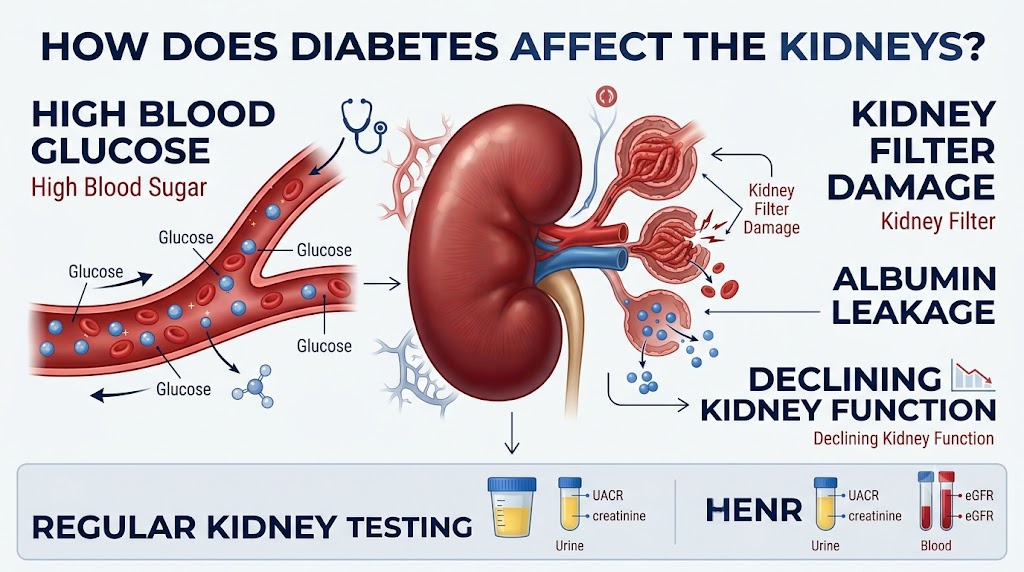
The connection between diabetes and kidney disease is mainly related to long-term high blood sugar and the effect it has on the kidney’s small blood vessels.
There are several ways this can happen.
High Blood Sugar Can Damage Kidney Filters
The kidneys contain tiny blood vessels that form part of the filtering system. These filters allow waste and extra fluid to leave the blood while keeping useful substances, including most proteins, in the bloodstream.
When blood sugar remains high for a long period, these small blood vessels can become damaged.
The filtering system may gradually become less effective. One early sign can be the appearance of albumin in the urine.
Albumin is a protein that normally remains in the bloodstream. When kidney filters become damaged, more albumin can pass through them and appear in urine.
This is why a urine test can sometimes identify diabetic kidney damage before a person notices any symptoms.
Diabetes Can Increase Pressure Inside the Kidneys
Diabetes can also change the way the kidneys filter blood.
In the early stages of kidney damage, the kidneys may sometimes filter blood at a higher rate than normal. This increased pressure within the filtering units can place additional stress on the kidney’s delicate structures.
Over time, continued stress can contribute to damage.
The process is usually gradual. A person may not feel anything unusual while these changes are taking place.
High Blood Pressure Can Add to Kidney Damage
High blood pressure is another major concern for people with diabetes.
When blood pressure remains high, it puts additional pressure on the blood vessels throughout the body, including the delicate vessels inside the kidneys.
This creates a difficult cycle. Diabetes can increase the risk of high blood pressure, while high blood pressure can further damage the kidneys.
For someone who has both diabetes and hypertension, managing both conditions becomes an important part of protecting kidney function.
Diabetes Can Affect Bladder and Urinary Function
Diabetes can also affect the nerves that control the bladder.
When bladder function is affected, some people may have difficulty emptying the bladder completely. This can contribute to urinary problems and may increase the risk of infections in some patients.
These problems are different from diabetic kidney disease itself, but they show why diabetes can affect the urinary system in several ways.
What Is Diabetic Kidney Disease?
Diabetic kidney disease is kidney damage that develops as a complication of diabetes.
It is also commonly referred to as diabetic nephropathy.
The condition usually develops gradually. Persistent high blood sugar can damage the blood vessels and filtering structures inside the kidneys. As the damage progresses, kidney function may decline.
One of the earliest measurable changes is often increased albumin in the urine.
Importantly, having diabetes does not automatically mean that a person will develop kidney disease. Some people with diabetes maintain good kidney function throughout their lives, particularly when blood sugar, blood pressure and other risk factors are well managed.
At the same time, diabetes should never be considered harmless to the kidneys. Regular testing helps identify changes early.
What Are the Early Signs of Diabetic Kidney Disease?
One of the biggest challenges with diabetes kidney damage is that there may be no obvious symptoms in the beginning.
A person may have elevated urine albumin or early changes in kidney function and still feel completely normal.
This is why waiting for symptoms before checking the kidneys is not a good approach for someone with diabetes.
As kidney disease becomes more advanced, symptoms may become more noticeable.
Possible signs can include:
- Swelling around the feet, ankles or legs
- Changes in urination
- Increased urination, particularly at night
- Persistent tiredness
- Nausea or reduced appetite
- Itching
- High blood pressure
- Changes related to excess fluid in the body
These symptoms do not prove that diabetes is the cause. Similar symptoms can occur with several other health conditions.
If you notice new or persistent changes, a doctor can recommend the appropriate tests instead of relying on symptoms alone.
How Is Diabetes-Related Kidney Damage Diagnosed?
Kidney testing in people with diabetes usually involves more than one measurement.
Two of the most useful tests are urine albumin testing and a blood test used to estimate kidney filtration.
Urine Albumin-to-Creatinine Ratio
The urine albumin-to-creatinine ratio, often called UACR, checks whether albumin is leaking into the urine.
A higher amount of albumin in urine can be a sign that the kidney’s filtering system is allowing more protein to pass through than it should.
The result needs to be interpreted by a healthcare professional because temporary factors can sometimes affect urine albumin levels.
For example, illness, exercise or other conditions may influence the result.
A doctor may therefore recommend repeat testing rather than making a diagnosis from a single abnormal result.
Serum Creatinine and eGFR
A blood test can measure creatinine, a waste product that is normally removed by the kidneys.
The creatinine result can be used to estimate how well the kidneys are filtering blood. This estimate is called the estimated glomerular filtration rate, or eGFR.
A lower eGFR can indicate reduced kidney function.
UACR and eGFR provide different pieces of information. Looking at both can give a clearer picture of kidney health.
Blood Pressure Monitoring
Blood pressure should also be monitored regularly.
High blood pressure can contribute to kidney damage and can become more common as kidney disease progresses.
For a person with diabetes, controlling blood pressure is therefore not only about protecting the heart. It is also an important part of protecting the kidneys.
Who Is at Higher Risk of Diabetic Kidney Disease?
Not everyone with diabetes has the same level of kidney risk.
Several factors can increase the likelihood of developing kidney damage.
These include:
- Having diabetes for many years
- Frequently elevated blood sugar levels
- Poorly controlled blood pressure
- Overweight or obesity
- Smoking
- High cholesterol
- Heart disease
- Physical inactivity
- A family history of kidney disease
The longer diabetes remains poorly controlled, the greater the opportunity for complications to develop.
However, risk is not determined by one factor alone. Your overall health, diabetes type, blood pressure, kidney test results and other medical conditions all matter.
How Does Type 1 Diabetes Affect the Kidneys?
People with type 1 diabetes can also develop diabetic kidney disease.
Because type 1 diabetes often begins at a younger age, kidney screening becomes important after living with the condition for several years.
Regular monitoring allows doctors to identify changes in urine albumin or kidney function before more significant damage develops.
The exact testing schedule depends on the individual and should be discussed with the treating doctor.
How Does Type 2 Diabetes Affect the Kidneys?
Type 2 diabetes is strongly associated with kidney disease.
One reason is that type 2 diabetes can remain unnoticed for some time before diagnosis. During this period, blood sugar may already have been elevated.
People with type 2 diabetes may also have other kidney risk factors, such as high blood pressure, excess weight and abnormal cholesterol levels.
For this reason, kidney health should be considered part of diabetes management rather than something to check only when symptoms appear.
Can Diabetic Kidney Damage Be Prevented?
Diabetic kidney disease cannot always be completely prevented. However, managing the factors that contribute to kidney damage can reduce risk and may slow progression when kidney disease is already present.
The approach is usually not based on one particular food, supplement or treatment.
Instead, kidney protection involves consistent management over time.
Keep Blood Sugar Under Control
Keeping blood glucose within the range recommended by your diabetes care team is one of the most important steps.
Consistently high blood sugar can continue to place stress on the blood vessels and filtering structures of the kidneys.
Your treatment plan may include medicines, dietary changes, physical activity and regular monitoring.
Do not change diabetes medicines on your own. Treatment needs to be adjusted according to your blood sugar levels, kidney function and other health factors.
Manage Blood Pressure
Blood pressure control is equally important.
If you have diabetes and high blood pressure, taking prescribed medicines consistently and monitoring your blood pressure can help reduce stress on the kidneys.
Some blood pressure medicines may also have kidney-protective benefits in appropriate patients, particularly when albumin is present in the urine.
However, the right medicine and dose depend on your individual health condition.
Follow a Kidney-Friendly Eating Plan When Needed
There is no single kidney diet that is suitable for every person with diabetes.
Dietary needs can change depending on kidney function, blood sugar levels, blood pressure, medications and other health conditions.
For some people, reducing excess salt may be useful. Others may need guidance regarding protein, potassium, phosphorus or fluid intake if kidney disease has progressed.
This is why copying a restrictive diet from the internet can sometimes do more harm than good.
A diet plan should be based on your medical condition and test results.
Stay Physically Active
Regular physical activity can support better blood sugar control, blood pressure management and overall cardiovascular health.
You do not necessarily need an intense workout routine.
Walking, cycling, swimming or other suitable activities can be part of a healthy lifestyle.
If you already have significant kidney disease or other medical conditions, discuss the appropriate level of physical activity with your doctor.
Avoid Kidney-Harming Medicines Without Medical Advice
People with diabetes should be careful about taking medicines or supplements without professional guidance.
Some pain medicines, particularly frequent or inappropriate use of certain non-steroidal anti-inflammatory drugs, can affect kidney function.
Herbal or “natural” supplements are not automatically safe for the kidneys either.
Always tell your doctor about the medicines, supplements and over-the-counter products you are taking.
How Often Should People With Diabetes Check Their Kidneys?
Kidney screening should be part of routine diabetes care.
People with type 2 diabetes are generally recommended to have kidney testing regularly. For people with type 1 diabetes, screening is typically recommended after living with diabetes for several years.
The exact frequency can vary depending on your kidney results and other risk factors.
If a person already has albumin in the urine, reduced eGFR or other signs of kidney disease, their doctor may recommend more frequent monitoring.
The important point is simple: do not wait for kidney symptoms before getting tested.
A urine test and blood test can provide useful information even when you feel completely well.
Can Diabetic Kidney Disease Lead to Kidney Failure?
Yes, diabetic kidney disease can progress to advanced chronic kidney disease and, in some people, kidney failure.
However, progression is not inevitable.
Early detection and appropriate management can make a significant difference. Controlling blood sugar and blood pressure, following prescribed treatment, maintaining a healthy lifestyle and attending regular follow-ups can all play a role in protecting kidney function.
When kidney function becomes severely reduced, treatment options may include dialysis treatment or kidney transplantation.
The goal of early kidney care is to identify problems before they reach this stage and to slow progression whenever possible.
If you already have reduced kidney function, your doctor may recommend a structured plan for chronic kidney disease management based on your stage and individual risk factors.
Can Diabetes Cause Kidney Problems Without Diabetic Kidney Disease?
Yes.
Not every person with diabetes who develops kidney disease necessarily has diabetic kidney disease.
Other conditions can also affect kidney function.
For example, high blood pressure, certain medications, infections, kidney stones, autoimmune conditions and other kidney disorders may contribute to reduced kidney function.
That is why doctors consider the full medical history, urine findings, blood tests and sometimes additional investigations before deciding what is causing kidney damage.
This distinction matters because treatment depends on the underlying cause.
When Should a Person With Diabetes See a Nephrologist?
A nephrologist is a doctor who specializes in kidney health and kidney diseases.
People with diabetes may benefit from a nephrology consultation when kidney tests become abnormal or when there are signs suggesting kidney damage.
You should discuss your kidney health with your doctor if you have:
- Persistent albumin in the urine
- A declining eGFR
- Swelling in the legs or around the eyes
- Difficult-to-control blood pressure
- Significant changes in urination
- Repeated abnormal kidney tests
- Diabetes along with other significant kidney risk factors
Early specialist evaluation does not necessarily mean that kidney disease is severe.
In many cases, the purpose is simply to understand what is happening, identify the cause and create a plan to protect kidney function.
For patients who already have diabetes-related kidney problems, appropriate diabetic kidney disease care can help monitor the condition and manage associated risks.
How Can You Protect Your Kidneys If You Have Diabetes?
Think of kidney protection as a long-term process rather than a one-time treatment.
Start by knowing your numbers. Keep track of your blood sugar, blood pressure and recommended kidney test results.
Take your prescribed medicines consistently and attend follow-up appointments even when you feel healthy.
Pay attention to your diet, stay physically active and avoid smoking.
Most importantly, do not assume that feeling well means your kidneys are definitely healthy. Diabetic kidney damage can develop silently.
Regular testing gives you an opportunity to identify changes earlier.
If you have diabetes and are concerned about your kidney function, discussing your reports with Dr. Sashidhar CH, Consultant Nephrologist in Hyderabad can help you understand your current kidney health and what steps may be appropriate for you.
Frequently Asked Questions
Does diabetes always cause kidney disease?
No. Diabetes increases the risk of kidney disease, but not everyone with diabetes develops kidney damage. Good management of blood sugar, blood pressure and other risk factors can help protect kidney health.
What is the first sign of diabetic kidney disease?
There may be no noticeable physical symptoms in the early stages. Increased albumin in the urine can be an early measurable sign, which is why regular urine testing is important.
Can diabetic kidney disease be reversed?
It depends on the stage and underlying cause. Early kidney changes may improve or remain stable when contributing factors are properly managed. More advanced structural kidney damage may not be fully reversible, but treatment can often help slow further progression.
What tests check kidney function in diabetes?
Common tests include a urine albumin-to-creatinine ratio and blood creatinine with eGFR. Blood pressure is also an important part of kidney risk assessment.
Can high blood sugar damage the kidneys even without symptoms?
Yes. Kidney damage related to diabetes can develop without obvious symptoms for a long time. This is one reason routine kidney screening is recommended for people with diabetes.
Is diabetic nephropathy the same as diabetic kidney disease?
The terms are often used to describe kidney damage caused by diabetes. “Diabetic kidney disease” is commonly used to describe this condition in current patient-focused medical information.
Can people with diabetes eat a normal diet?
Dietary recommendations depend on your blood sugar control, kidney function and overall health. A person with diabetes does not automatically need a highly restrictive kidney diet. If kidney disease is present, dietary needs should be individualized.
When should I see a kidney specialist?
If you have persistent protein or albumin in your urine, reduced eGFR, difficult-to-control blood pressure or other abnormal kidney results, your doctor may recommend seeing a nephrologist.
Final Thoughts
Diabetes can affect the kidneys gradually, often long before a person notices any symptoms. Long-term high blood sugar can damage the small blood vessels and filtering structures inside the kidneys. High blood pressure and other health conditions can add to this stress.
The good news is that kidney health can be monitored.
Regular urine and blood tests can identify changes early. Keeping blood sugar and blood pressure under control, following an appropriate diet, staying active and taking prescribed medicines can all support long-term kidney health.
If you have diabetes, do not wait for symptoms before thinking about your kidneys. A simple conversation with your doctor and regular kidney testing can help you understand your risk and take action at the right time.
If you have abnormal kidney reports or concerns about diabetes-related kidney damage, you can contact Dr. Sashidhar CH for a nephrology consultation in Hyderabad.
Medically reviewed by Dr. Sashidhar CH, Nephrologist, Hyderabad | 20+ Years of Experience.