

A kidney transplant can bring major changes to a person’s daily life. Many patients feel more energetic after recovery and may be able to return to work, spend more time with family, travel and enjoy activities that were difficult during kidney failure or dialysis.
However, a transplant does not mean that kidney disease is completely over. Life after kidney transplant requires regular medical care, daily medicines, healthy lifestyle habits and close monitoring of kidney function.
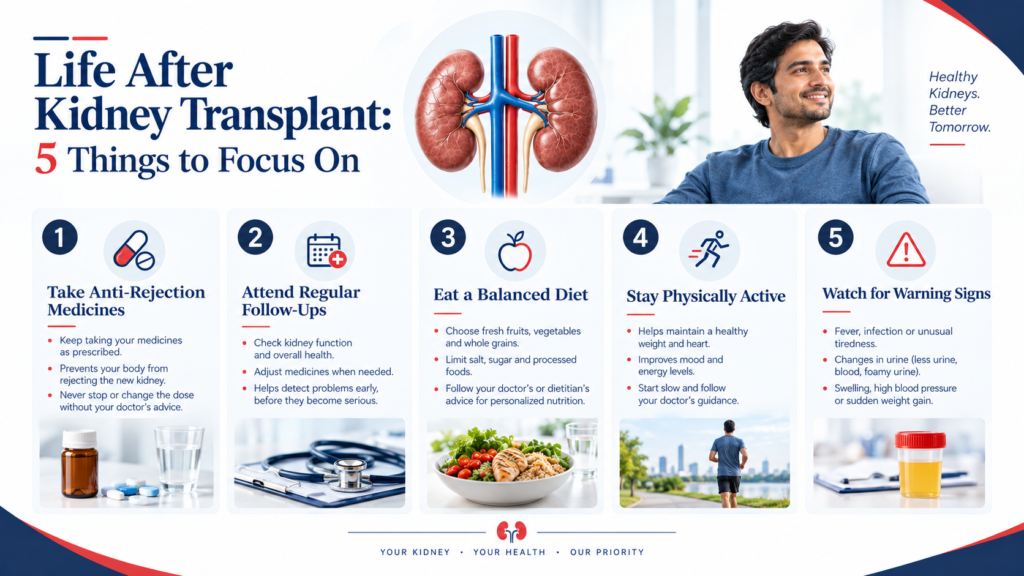
The transplanted kidney needs protection for the long term. Taking medicines as prescribed and attending regular follow-up appointments are among the most important parts of caring for a transplanted kidney.
Medically reviewed by Dr. Sashidhar CH, Nephrologist, Hyderabad | 20+ Years of Experience
What Is Life Like After a Kidney Transplant?
Life after kidney transplant can be very different from life with advanced kidney disease or dialysis. Once the new kidney starts working well, many patients experience improved energy and greater freedom in their daily routine.
A successful transplant can also reduce some of the restrictions associated with dialysis. However, every patient has a different recovery journey. Some people recover quickly, while others need more time because of complications, other health conditions or delayed kidney function.
A kidney transplant is a treatment for kidney failure rather than a permanent cure for the underlying causes of kidney disease. The new kidney must be monitored throughout the patient’s life.
Patients who previously had conditions such as diabetes or high blood pressure should continue managing them carefully. Proper chronic kidney disease management remains important because overall health can affect the long-term health of the transplanted kidney.
Kidney Transplant Recovery: What to Expect
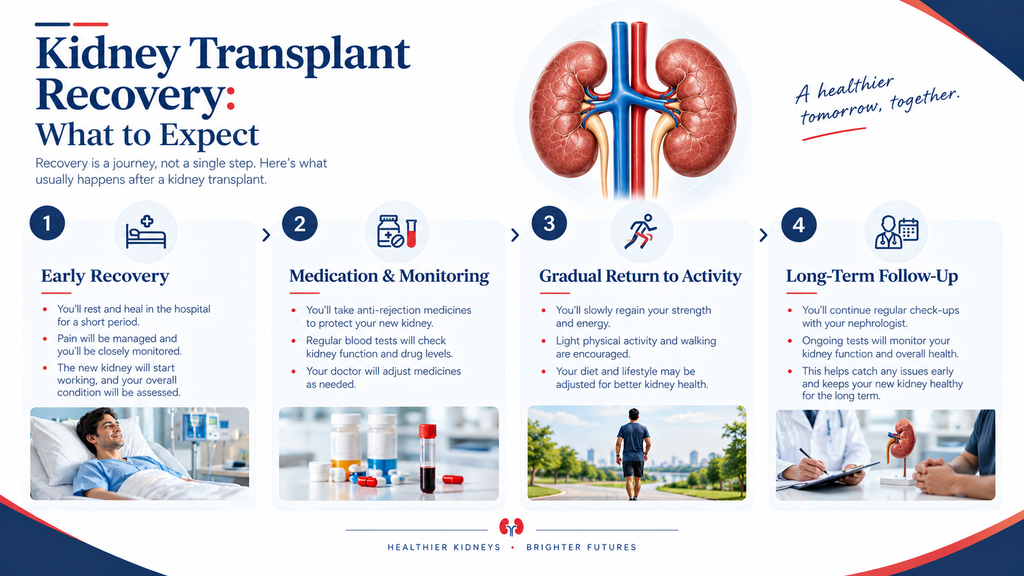
The first few weeks after transplant are usually focused on healing and making sure the new kidney is functioning properly.
Some transplanted kidneys begin working immediately. In other cases, the kidney may take several days before it starts filtering waste effectively. Hospital recovery may also vary depending on the patient’s condition and whether any complications occur.
During the early recovery period, patients may have:
- Regular blood tests
- Frequent medical appointments
- Changes in medication doses
- Monitoring of urine output
- Monitoring of blood pressure and weight
- Instructions about wound care and physical activity
- Advice about food, fluids and infection prevention
Your transplant team will decide when you can gradually return to normal activities. Recovery should not be rushed, even if you start feeling better.
Life After Kidney Transplant Surgery: Medicines Are Essential
One of the biggest changes after transplant is the need for anti-rejection medicines.
Your immune system naturally identifies foreign substances and tries to protect your body from them. Because the transplanted kidney comes from another person, the immune system may recognize it as foreign.
Anti-rejection medicines, also called immunosuppressants, reduce this immune response and help protect the transplanted kidney. Most transplant recipients need these medicines for as long as the transplanted kidney is functioning.
Never stop or change these medicines on your own.
Even if you feel completely healthy, missing doses can increase the risk of rejection. Your doctor may also regularly check medicine levels and kidney function to make sure treatment is working safely.
If you experience side effects, speak with your doctor rather than stopping the medicine yourself.
Regular Follow-Up After Kidney Transplant
Regular follow-up is an important part of care after kidney transplant.
You may feel well even when there is an early problem with the transplanted kidney. Blood tests and other investigations can sometimes detect changes before noticeable symptoms develop. This is one reason regular appointments should not be skipped.
Your doctor may monitor:
- Creatinine and kidney function
- Blood pressure
- Urine tests
- Medication levels
- Blood sugar
- Electrolytes
- Signs of infection
- Signs of rejection
The frequency of testing may be higher soon after transplant and may change as your condition becomes stable.
Following your transplant team’s testing schedule gives your doctor a better opportunity to identify problems early.
Signs of Kidney Transplant Rejection
Kidney transplant rejection can sometimes develop without obvious symptoms. Routine blood tests may detect changes before the patient feels unwell.
Possible warning signs can include:
- Reduced urine output
- Fever
- Swelling
- Unexpected weight gain
- Pain or tenderness around the transplanted kidney
- Increased blood pressure
- Unusual tiredness
- Flu-like symptoms
These symptoms do not always mean rejection. They can also occur with infections or other medical problems.
However, a transplant recipient should not ignore new or unexplained symptoms. Contact your transplant team promptly if you feel unwell or notice a significant change in your health.
Diet After Kidney Transplant
Dietary restrictions may change after a successful transplant. Many patients have more freedom with food compared with their dialysis diet, but healthy eating remains important.
A balanced diet can help control weight, blood pressure and blood sugar while supporting overall health. A diet that is lower in salt and rich in nutritious foods is generally encouraged, but individual dietary needs can vary.
Your diet may need to be adjusted if you have diabetes, high blood pressure, high cholesterol or other medical conditions.
Foods to Be Careful About
Because anti-rejection medicines weaken the immune system, food safety becomes particularly important.
Patients may be advised to avoid foods such as:
- Raw or undercooked meat and seafood
- Raw or undercooked eggs
- Unpasteurized milk and dairy products
- Unwashed fruits and vegetables
- Certain foods that interact with transplant medicines
Grapefruit and grapefruit juice can interact with some anti-rejection medicines. Pomegranate and some herbal products may also interact with transplant medicines. Always check with your doctor or pharmacist before adding supplements, herbal products or new medicines.
There is no single diet that is suitable for every transplant recipient. A transplant dietitian can help create a plan based on kidney function, medications, diabetes, blood pressure and other health conditions.
Exercise and Physical Activity After Transplant
Regular physical activity can become an important part of a healthy kidney transplant patient lifestyle.
You should allow your body enough time to recover after surgery before returning to exercise. Your transplant team can advise you about when it is safe to start and how quickly you should increase activity.
Once medically cleared, activities such as walking can be a practical way to gradually improve fitness.
Exercise can also help with:
- Maintaining a healthy weight
- Blood pressure control
- Blood sugar management
- Cardiovascular health
- Muscle strength
- Overall physical well-being
Avoid suddenly starting strenuous exercise without medical advice, particularly during the early recovery period.
Preventing Infections After a Kidney Transplant
Anti-rejection medicines suppress the immune system. This helps protect the transplanted kidney from rejection but can also make infections more likely.
Simple precautions can reduce exposure to infections.
Wash your hands regularly and take extra care around people who are sick. Follow the vaccination advice given by your transplant team. Do not receive vaccines or take medicines without checking whether they are appropriate for you.
Contact your doctor promptly if you develop symptoms such as fever, persistent cough, burning while urinating or other signs of infection.
Managing Diabetes and Blood Pressure After Transplant
Diabetes and high blood pressure remain important health concerns after transplantation.
Some transplant medicines can affect blood sugar, blood pressure, cholesterol or body weight. Therefore, regular monitoring is important even when the transplanted kidney is working well.
Patients who have diabetes should continue following their diabetes treatment plan. Those with high blood pressure should monitor their readings and take prescribed medicines consistently.
For patients with diabetes-related kidney damage, continued attention to diabetic kidney disease and metabolic health is also important after transplant.
Your doctor may adjust medications and lifestyle recommendations according to your blood tests and overall health.
Can You Return to Work After a Kidney Transplant?
Many patients can eventually return to work after recovering from transplant surgery.
The timing depends on the type of work you do, your recovery and whether any complications occur.
Someone with an office-based job may be able to return sooner than someone whose work involves heavy lifting or physically demanding activity.
Do not compare your recovery with another transplant patient. Your doctor can advise you about when it is safe to resume work and other activities.
Can You Travel After a Kidney Transplant?
Travel may be possible after recovery, but it should be planned carefully.
Patients may need time after surgery before travelling long distances. Your doctor may want to make sure that the transplanted kidney is stable and medications are properly adjusted before you travel.
When travelling, keep enough medication with you and avoid running out of essential medicines. Carry your medicines according to your transplant team’s instructions and keep important medical information accessible.
If you are planning international travel, discuss the trip with your transplant team in advance.
How Can You Protect Your New Kidney?
The goal of long-term care is to protect kidney function and reduce avoidable complications.
Some important habits include:
- Take anti-rejection medicines exactly as prescribed.
- Attend all follow-up appointments.
- Complete recommended blood and urine tests.
- Monitor blood pressure and blood sugar when advised.
- Follow a balanced diet.
- Maintain a healthy weight.
- Stay physically active after medical clearance.
- Avoid smoking.
- Follow food-safety precautions.
- Contact your doctor when you develop concerning symptoms.
If you previously required dialysis treatment, your routine may feel very different after transplantation. However, continued medical follow-up remains necessary because the transplanted kidney needs lifelong care.
What Should Kidney Transplant Patients Avoid?
There is no universal list of everything every transplant patient must avoid. Your medicines, kidney function and other health conditions determine what is appropriate for you.
However, patients should generally avoid making major changes to medicines without medical advice.
It is also important to be cautious with over-the-counter medicines, supplements and herbal products. Some products can interact with anti-rejection medicines or affect kidney function.
Do not assume that a product is safe simply because it is labelled “natural.”
Ask your doctor or pharmacist before starting anything new.
When Should You Contact Your Doctor?
After a kidney transplant, it is better to discuss a concern early rather than wait for it to become serious.
Contact your transplant team if you notice:
- Fever or chills
- A significant reduction in urine
- Swelling
- Sudden weight gain
- Pain around the transplanted kidney
- Persistent vomiting or diarrhoea
- Burning or pain while urinating
- Persistent cough or breathing difficulty
- Unusual tiredness
- Problems taking or keeping down your medicines
Some transplant complications can develop before obvious symptoms appear. This makes scheduled blood tests and follow-up appointments especially important.
Emotional Health After Kidney Transplant
A transplant can bring relief after years of kidney disease and dialysis. At the same time, some patients may experience anxiety about rejection, medication side effects, test results or the future.
These feelings are not unusual.
Try to stay connected with your family and healthcare team. If anxiety, low mood or fear starts affecting your daily life, speak with your doctor and ask about appropriate support.
Taking care of your mental health is also part of long-term transplant care.
Life After Kidney Transplant: What Patients Should Remember
Life after kidney transplant can offer greater freedom and a better quality of life, but it also comes with responsibility.
The new kidney needs regular monitoring and protection. Anti-rejection medicines must be taken consistently, medical appointments should not be missed and lifestyle habits such as healthy eating and physical activity should become part of your routine.
Most importantly, do not judge the success of your transplant only by how you feel. Some problems can begin before symptoms become noticeable. Regular tests help your doctor identify changes early.
If you have questions about your kidney function, transplant medicines, blood tests or long-term kidney health, discuss them with your nephrologist rather than making changes on your own.
Frequently Asked Questions About Life After Kidney Transplant
1. What is life like after a kidney transplant?
Many patients are able to return to a more active daily life after recovery. They may return to work, exercise, travel and spend more time with family. However, lifelong medicines and regular medical monitoring remain necessary.
2. How long does kidney transplant recovery take?
Recovery varies between patients. The hospital stay and return to normal activities depend on the patient’s health, surgery and whether complications occur. Your transplant team will guide you through each stage of recovery.
3. Do kidney transplant patients need medicines for life?
Anti-rejection medicines are generally required for as long as the transplanted kidney is functioning. These medicines help prevent the immune system from attacking the transplanted kidney.
4. Can I eat normally after a kidney transplant?
Many patients have fewer dietary restrictions after transplant, but a healthy balanced diet remains important. Your diet may also depend on your kidney function, medications, diabetes, blood pressure and other health conditions.
5. Can I exercise after a kidney transplant?
Exercise can be part of a healthy lifestyle after transplant, but you should wait until your doctor says it is safe. Start gradually and follow your transplant team’s recommendations.
6. What are the signs of kidney transplant rejection?
Possible signs include reduced urine output, fever, swelling, unexpected weight gain, pain around the transplanted kidney and increased blood pressure. However, rejection can sometimes occur without obvious symptoms, which is why regular testing is important.
7. Can kidney transplant patients travel?
Many patients can travel after recovery, but the timing should be discussed with the transplant team. Make sure you have enough medicines and plan your medical care before travelling.
8. Can a transplanted kidney fail?
Yes. Transplant failure can occur for different reasons, including rejection and other complications. Taking medicines correctly, attending follow-up appointments and reporting concerning symptoms can help your medical team identify problems early.
9. Is a kidney transplant a permanent cure for kidney disease?
A transplant treats kidney failure but does not necessarily cure the condition that caused the original kidney damage. The transplanted kidney requires lifelong care and monitoring.
10. When should I see a nephrologist after a kidney transplant?
You should follow the appointment schedule given by your transplant team. You should also contact your doctor promptly if you develop symptoms such as fever, reduced urine output, swelling, pain or other unexpected changes.
Talk to a Kidney Specialist About Your Long-Term Kidney Health
Life after kidney transplant can be rewarding, but long-term care should not be taken lightly. Regular monitoring, medicines, healthy lifestyle habits and timely medical advice can all help protect the transplanted kidney.
If you have concerns about kidney function, transplant follow-up or other kidney-related conditions, you can discuss your situation with Dr. Sashidhar CH, Consultant Nephrologist in Hyderabad.
You can also contact the nephrology clinic for an appointment and discuss your individual kidney health needs with a specialist.
Important: This article is for general educational information. Kidney transplant care is highly individual. Always follow the treatment, medication and dietary advice given by your transplant or nephrology team.