
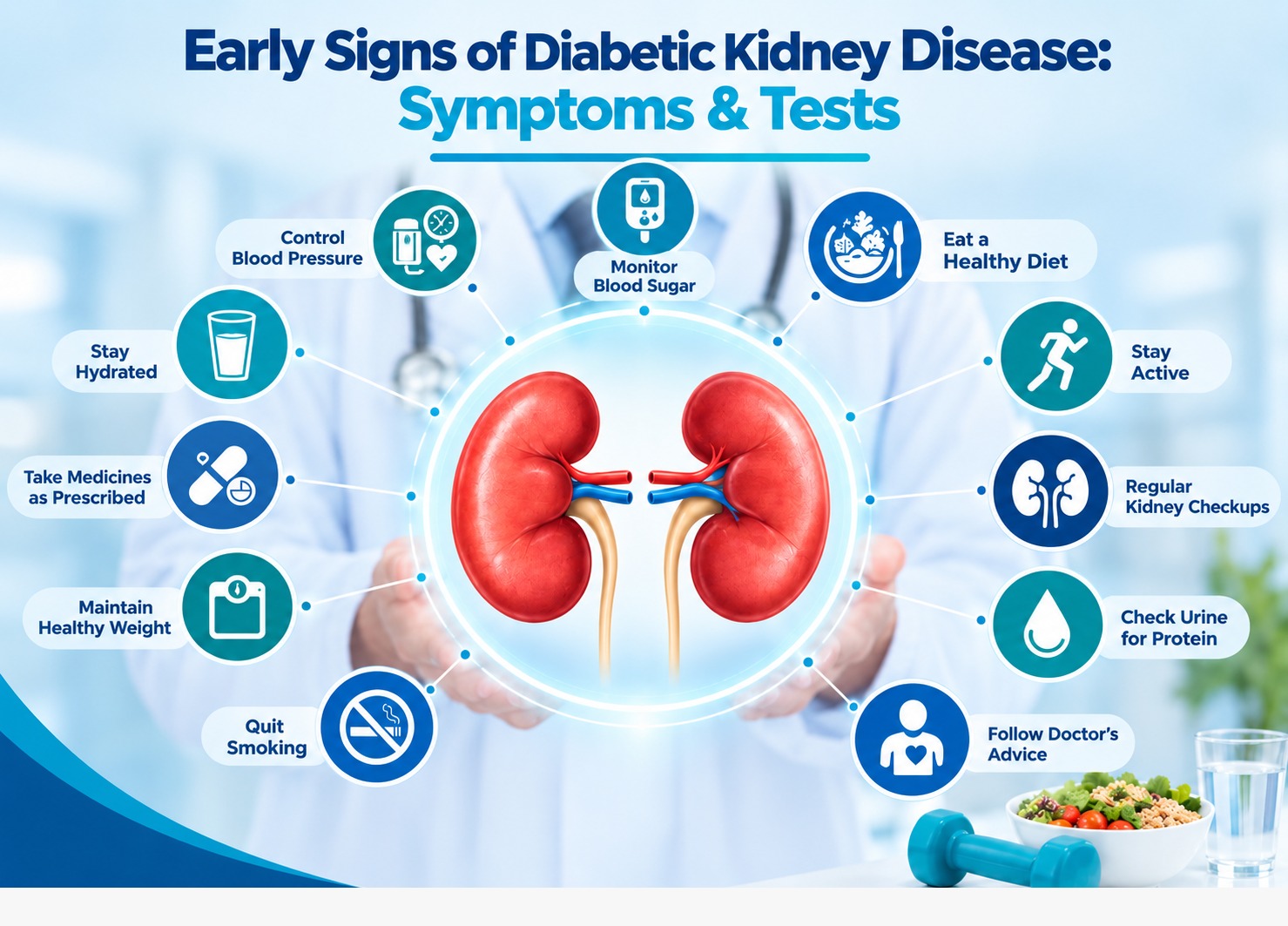
If you have diabetes, checking your blood sugar may already be part of your routine. Diabetic kidney disease can develop gradually, and many people do not notice anything wrong at first. Knowing the early signs and getting the right tests can help identify kidney changes sooner.
What Is Diabetic Kidney Disease?
Diabetic kidney disease is kidney damage related to diabetes. Over time, high blood glucose can affect the tiny blood vessels and filtering units inside the kidneys. High blood pressure can add more strain and increase the risk of kidney problems.
When their filtering structures become damaged, a protein called albumin can start leaking into the urine. This may happen before noticeable symptoms develop.
Can Diabetic Kidney Disease Develop Without Symptoms?
Yes. Early diabetic kidney disease often causes no obvious symptoms. You may feel healthy while changes are already showing up in urine or blood tests.
That is why regular kidney screening is important for people with diabetes. Symptoms alone cannot reliably tell you whether your kidneys are being affected.
What Are the Early Signs of Diabetic Kidney Disease?
The earliest clues are often found through testing rather than something you can feel. A urine test may detect higher levels of albumin, while a blood test can help show how well the kidneys are filtering.
As kidney function declines, some people may develop swelling in the feet or ankles, changes in urination, tiredness, or changes in blood pressure. These symptoms can have other causes, so they cannot confirm diabetic kidney disease.
What Symptoms Can Occur as Kidney Disease Progresses?
More noticeable symptoms may appear when kidney function has declined significantly. These can include persistent fatigue, swelling, nausea, reduced appetite, itching, changes in urination, or difficulty concentrating.
Having one does not necessarily mean you have kidney disease, while having no symptoms does not rule it out. Proper testing is needed to understand what is happening.
How Is Diabetic Kidney Disease Detected Early?
Two important tests are commonly used to assess kidney health in people with diabetes: the urine albumin-to-creatinine ratio (UACR) and estimated glomerular filtration rate (eGFR).
What Is a UACR Test?
A UACR test checks the amount of albumin in your urine compared with creatinine. Albumin in the urine can be an early indication that the kidney’s filtering barrier is being affected.
A UACR below 30 mg/g is generally considered normal. Persistent results of 30 mg/g or higher may indicate increased albuminuria and should be reviewed by a healthcare professional.
What Does eGFR Tell You?
eGFR is an estimate of how well your kidneys filter blood. It is calculated mainly from your blood creatinine level and other factors used in the estimating equation.
A persistent eGFR below 60 mL/min/1.73 m² can be a sign of chronic kidney disease. Doctors interpret it alongside other tests, your medical history, and changes over time.
Who Has a Higher Risk?
Risk may be higher in people who have had diabetes for a longer period or who also have high blood pressure, high blood glucose, cardiovascular disease, a family history of kidney disease, or a history of smoking.
People with type 2 diabetes are generally advised to have regular kidney screening. For people with type 1 diabetes, screening is generally recommended after five years, although individual advice may differ.
How Can You Protect Your Kidney Health?
Managing blood glucose and blood pressure can help support kidney health.
Helpful habits include taking prescribed medicines as directed, avoiding smoking, staying physically active when appropriate, following a balanced eating pattern, and attending recommended kidney tests. Do not stop or change prescribed medicines without speaking with your healthcare professional.
Frequently Asked Questions
1. What is usually the first sign of diabetic kidney disease?
There may be no physical symptom in the beginning. One of the earliest detectable changes can be increased albumin in the urine, which is why UACR testing is useful.
2. Can diabetic kidney disease be reversed?
It depends on the stage and cause. Early abnormalities may improve or remain stable when blood glucose, blood pressure, and other risk factors are managed. Established kidney damage may not always be reversible.
3. How often should people with diabetes have kidney tests?
The schedule depends on your type of diabetes, how long you have had it, and your individual risk. Your healthcare professional can recommend how often you should have UACR and eGFR tests.
4. Does foamy urine mean diabetic kidney disease?
Not necessarily. Foamy urine can happen for different reasons and does not by itself diagnose kidney disease. If it continues, mention it to your doctor, who may recommend a urine test.
5. When should I see a doctor?
If you have diabetes and notice persistent swelling, changes in urination, unusual tiredness, or other concerning changes, arrange a medical evaluation. Regular kidney screening is important because early disease can be silent.
Conclusion
Diabetic kidney disease can begin without noticeable symptoms, making regular screening an important part of diabetes care. UACR and eGFR can provide useful information about kidney health before symptoms become obvious.
If you have diabetes, keep up with recommended tests and follow your healthcare professional’s treatment plan. If you notice changes that concern you, seek medical advice rather than trying to diagnose the cause yourself.