
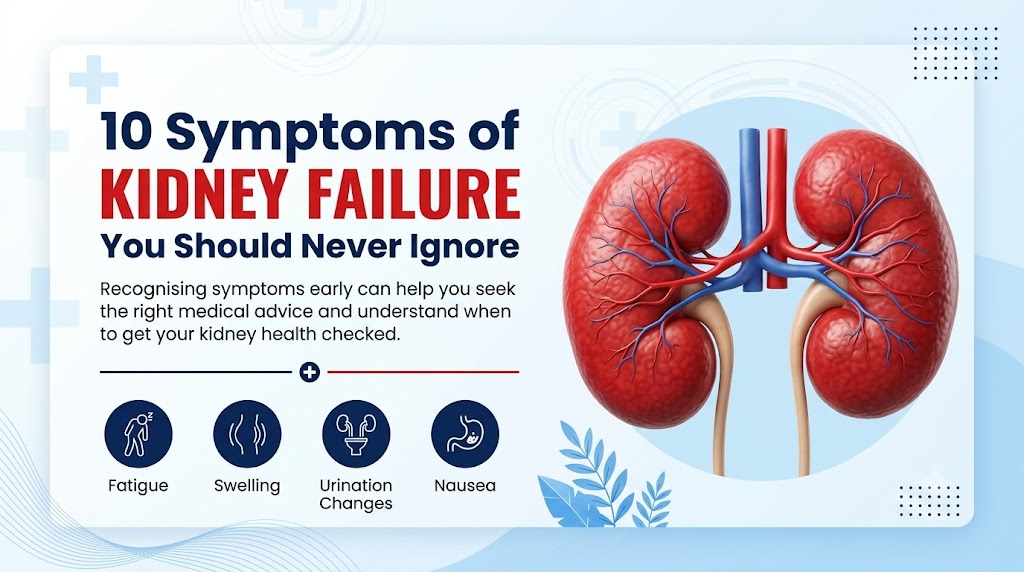
Your kidneys play an important role in keeping your body healthy. They remove waste and extra fluid from the blood, help maintain the right balance of minerals, and support several essential body functions.
When kidney function becomes severely reduced, waste products and excess fluid can build up in the body. This can lead to different health changes. Understanding the 10 symptoms of kidney failure can help you recognise persistent or unusual symptoms that may require medical attention.
The symptoms of kidney failure can vary from person to person. Some symptoms may also occur because of other health conditions. For this reason, symptoms alone cannot confirm kidney failure. Proper blood tests, urine tests, and medical evaluation are important.
Some people with kidney disease may have few noticeable symptoms until kidney function has declined significantly. If you have diabetes, high blood pressure, existing kidney disease, or a family history of kidney problems, regular kidney health monitoring can be important.
What Is Kidney Failure?
Kidney failure occurs when the kidneys can no longer perform their essential functions well enough to meet the body’s needs. When kidney function becomes severely reduced, the body may struggle to remove enough waste and extra fluid.
As these substances build up, they can affect different parts of the body. This is why the signs of kidney failure may include changes in urination, swelling, tiredness, nausea, breathing difficulties, itching, and difficulty concentrating.
It is important to understand that kidney disease and kidney failure are not exactly the same thing. Chronic kidney disease can progress gradually over time, while kidney failure represents severe loss of kidney function. In addition, some people may develop a sudden decline in kidney function because of acute kidney injury.
The following symptoms can occur when kidney function becomes severely reduced. However, having one or more of these symptoms does not automatically mean that you have kidney failure.
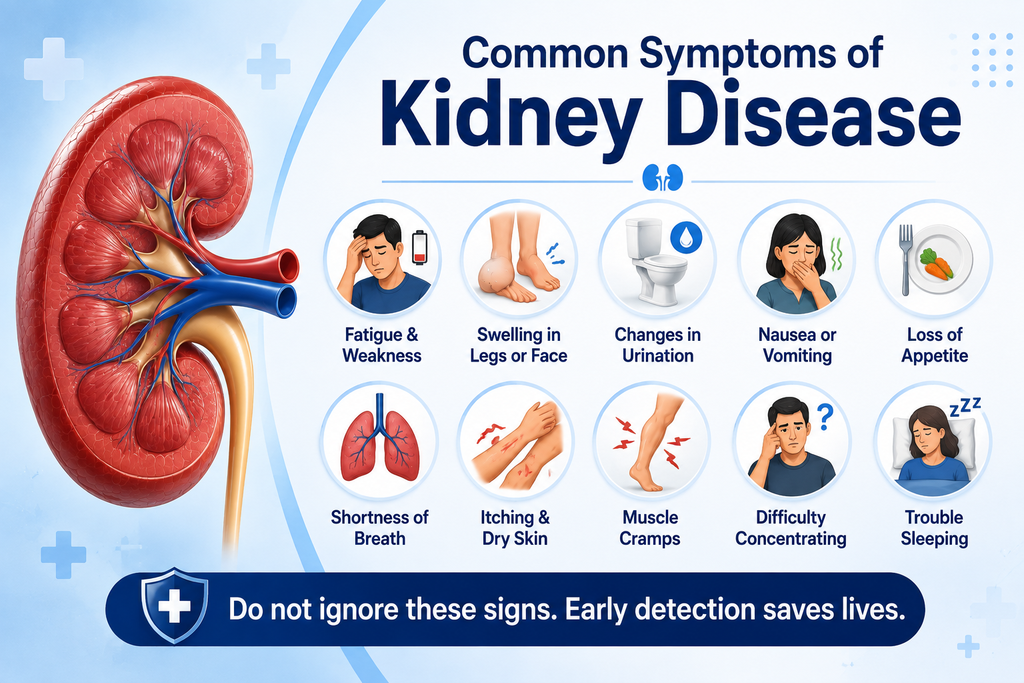
1. Changes in Urination
Changes in urination can be one of the possible symptoms of kidney failure. Because the kidneys filter blood and produce urine, significant changes in kidney function may affect a person’s normal urination pattern.
Some people may notice that they produce less urine than usual. Others may notice changes in how frequently they urinate or changes in the appearance of their urine.
Possible changes may include:
- Producing less urine than usual
- Changes in the usual frequency of urination
- Changes in urine appearance
- Foamy-looking urine
- Blood in the urine
It is important to remember that these changes can occur for many reasons. Dehydration, urinary infections, certain medicines, and other medical conditions may also affect urination.
However, persistent changes should not be ignored. A sudden or significant reduction in urine output, especially when accompanied by swelling, weakness, or breathing difficulty, requires medical attention.
2. Persistent Fatigue and Weakness
Persistent tiredness is one of the possible signs of kidney failure. A person may feel unusually tired even after getting enough sleep or taking time to rest.
This type of fatigue may affect daily activities. Tasks that previously felt easy may become more difficult because of low energy or weakness.
People may experience:
- Constant tiredness
- Low energy levels
- General weakness
- Reduced ability to exercise
- Difficulty completing routine activities
- Difficulty staying alert
Kidney problems can contribute to fatigue in different ways. When the kidneys do not work properly, waste products may build up in the body. Kidney disease can also contribute to anaemia, which may cause weakness and tiredness.
However, fatigue is a common symptom with many possible causes. Sleep problems, stress, infections, thyroid conditions, and other health problems can also cause persistent tiredness.
If fatigue continues without an obvious reason and occurs with other possible kidney-related symptoms, it is important to seek medical advice.
3. Swelling in the Feet, Ankles, Legs, or Face
Swelling can occur when the body retains extra fluid. Healthy kidneys help remove excess salt and water. When kidney function becomes severely reduced, extra fluid may remain in the body.
This can lead to swelling in different areas.
Common areas include:
- Feet
- Ankles
- Lower legs
- Hands
- Face
- Around the eyes
Some people may notice that their shoes or socks suddenly feel tighter. Rings may also feel tighter because of swelling in the hands.
Fluid retention can become more noticeable over time. In some people, swelling may also be associated with weight gain because of retained fluid.
However, kidney problems are not the only cause of swelling. Heart problems, liver conditions, certain medicines, and circulation problems can also cause fluid retention.
Persistent or worsening swelling should therefore be evaluated by a healthcare professional.
4. Shortness of Breath
Shortness of breath can be a concerning symptom when kidney function becomes severely reduced. In some cases, excess fluid in the body can contribute to breathing difficulties.
A person may feel breathless while walking, climbing stairs, or doing activities that previously did not cause difficulty. Some people may also experience discomfort when lying flat.
Kidney-related complications can affect breathing in different ways. Fluid retention may affect the lungs, while anaemia may also contribute to weakness and breathlessness.
However, shortness of breath can have many causes, including heart and lung conditions.
Sudden or severe breathing difficulty should never be ignored. Seek urgent medical care if shortness of breath occurs with chest pain, confusion, fainting, or severe weakness.
5. Nausea and Vomiting
Nausea is another possible symptom when kidney function becomes severely reduced. As the kidneys struggle to remove waste effectively, waste products can build up in the body and affect overall wellbeing.
Some people may experience occasional nausea, while others may experience persistent symptoms. In more severe cases, vomiting may also occur.
Possible symptoms include:
- Feeling nauseous
- Repeated nausea
- Vomiting
- Feeling unwell after eating
- Reduced interest in food
Persistent nausea can affect a person’s ability to eat and maintain proper nutrition. Over time, this may contribute to weakness and unintentional weight loss.
Nausea and vomiting are common symptoms with many possible causes. Digestive conditions, infections, medicines, and other illnesses can also cause these symptoms.
However, persistent nausea together with other kidney failure warning signs should be medically evaluated.
6. Loss of Appetite and Changes in Taste
Loss of appetite can occur in people with advanced kidney problems. A person may simply not feel hungry or may lose interest in foods they previously enjoyed.
Some people may also notice changes in taste. Food may taste different or less appealing than usual.
Possible changes include:
- Reduced appetite
- Feeling full quickly
- Food tasting different
- An unpleasant taste in the mouth
- Reduced interest in eating
Loss of appetite can affect nutrition. If a person consistently eats less, they may lose weight and become weaker over time.
Taste changes can also occur because of medicines, dental problems, infections, smoking, and other health conditions. Therefore, these symptoms alone cannot confirm kidney failure.
If appetite changes continue and occur with fatigue, nausea, swelling, or other symptoms, medical evaluation can help identify the cause.
7. Persistent Itching and Dry Skin
Persistent itching may occur in people with advanced kidney disease or kidney failure. The itching may affect one area of the body or feel more widespread.
Some people may also experience dry or uncomfortable skin.
The kidneys help maintain a healthy balance of minerals and other substances in the body. When kidney function becomes severely reduced, changes in this balance may contribute to skin symptoms.
Possible symptoms include:
- Persistent itching
- Dry skin
- Skin discomfort
- Difficulty sleeping because of itching
Itching is also common with allergies and skin conditions. Liver problems and other medical conditions can also cause itching.
For this reason, persistent itching should not be used to self-diagnose kidney failure. However, when itching occurs together with several other possible symptoms of kidney failure, medical advice may be necessary.
8. Difficulty Concentrating or Mental Confusion
Difficulty concentrating can occur when a person is unwell or when kidney function becomes severely reduced. Some people describe feeling mentally slow or experiencing brain fog.
Possible symptoms may include:
- Difficulty focusing
- Forgetfulness
- Reduced concentration
- Trouble following conversations
- Feeling mentally foggy
In more serious situations, confusion may develop. Sudden confusion should always be taken seriously because it can have several serious medical causes.
Mental changes can also occur because of poor sleep, stress, medicines, dehydration, infections, and neurological conditions.
However, difficulty concentrating that occurs together with other signs of kidney failure should be discussed with a doctor.
9. Muscle Cramps and Weakness
Muscle cramps and weakness can occur when the body has difficulty maintaining the right balance of fluids and minerals.
The kidneys play an important role in regulating substances such as sodium and potassium. Severe kidney dysfunction can affect this balance.
Some people may experience:
- Frequent muscle cramps
- Muscle weakness
- Twitching
- Numbness or tingling
- General physical weakness
Muscle cramps are common and do not always indicate a kidney problem. Dehydration, exercise, medicines, and nutritional problems can also cause cramps.
However, repeated muscle cramps together with swelling, fatigue, changes in urination, or other possible early symptoms of kidney failure should not be ignored.
10. Trouble Sleeping
Sleep problems can affect people with advanced kidney disease and kidney failure. A person may feel tired throughout the day but still struggle to get good-quality sleep.
Possible problems include:
- Difficulty falling asleep
- Waking frequently during the night
- Poor-quality sleep
- Feeling tired despite sleeping
- Difficulty sleeping because of itching or cramps
Physical discomfort, breathing problems, itching, anxiety, and changes in overall health may all affect sleep.
Sleep problems are extremely common and can have many causes. However, poor sleep together with other persistent symptoms may be part of a wider health issue.
What Are the Early Symptoms of Kidney Failure?
The term early symptoms of kidney failure can sometimes be misleading. Chronic kidney disease may cause few or no noticeable symptoms in its earlier stages.
Many people do not realise they have kidney disease until kidney function has already declined. This is why regular medical testing is important for people who have risk factors.
As kidney function declines, some people may begin to experience:
- Persistent fatigue
- Changes in urination
- Swelling
- Loss of appetite
- Nausea
- Difficulty concentrating
- Muscle cramps
The early signs of kidney failure are not always the same for everyone. Some people may notice only one or two symptoms, while others may experience several.
Symptoms should never replace proper testing. Blood and urine tests are needed to understand how well the kidneys are functioning.

Who Is at Higher Risk of Kidney Failure?
Certain health conditions can increase the risk of developing chronic kidney disease and, in some cases, kidney failure.
Diabetes
Diabetes is one of the major causes of chronic kidney disease. High blood sugar over time can damage the small blood vessels in the kidneys.
People with diabetes should follow their doctor’s recommendations for blood sugar control and kidney health monitoring.
High Blood Pressure
High blood pressure can damage blood vessels throughout the body, including those in the kidneys.
Kidney problems can also make blood pressure more difficult to control. Regular monitoring is therefore important.
Existing Kidney Disease
People who already have chronic kidney disease need regular follow-up because kidney function may change over time.
Not everyone with chronic kidney disease develops kidney failure, but regular monitoring helps doctors identify changes.
Family History of Kidney Disease
Some kidney conditions can run in families. A family history does not guarantee that someone will develop kidney disease, but it can be an important risk factor.
Heart and Blood Vessel Problems
The heart and kidneys are closely connected. Conditions that affect blood circulation can also affect kidney health.
People with heart-related conditions should discuss their kidney health with their healthcare team.
How Is Kidney Failure Diagnosed?
Doctors do not diagnose kidney failure based only on symptoms. They consider a person’s symptoms, medical history, physical examination, and laboratory test results.
Blood Tests
Blood tests help doctors assess how well the kidneys are filtering waste from the blood.
Changes in certain blood values can provide information about kidney function.
Kidney Function Tests
Doctors may use an estimated measure of kidney filtration to understand how effectively the kidneys are working.
They also look at changes in results over time rather than relying on a single test alone.
Urine Tests
Urine tests can help identify abnormalities such as protein or blood in the urine.
These findings may help doctors investigate possible kidney damage.
Imaging Tests
In some situations, imaging tests may be used to examine the kidneys and urinary system.
These tests can help identify structural problems, kidney size changes, or possible blockages.
When Should You See a Nephrologist?
Note: Please do not panic if you notice one or more of these symptoms. They do not always mean kidney failure. A doctor can help identify the actual cause through appropriate blood and urine tests and guide you on the next steps.
A nephrologist specialises in kidney health and kidney-related conditions.
You should seek medical advice if you experience persistent symptoms such as:
- Significant swelling
- Major changes in urination
- Persistent unexplained fatigue
- Repeated nausea or vomiting
- Ongoing loss of appetite
- Difficulty concentrating
- Persistent itching
- Shortness of breath
- Abnormal kidney blood or urine test results
People with diabetes, high blood pressure, or known kidney disease should also follow regular monitoring recommendations.
A medical evaluation can help identify the cause of symptoms and determine whether kidney-related testing is needed.
Emergency Warning Signs You Should Not Ignore
Some symptoms require urgent medical attention.
Seek emergency medical care if you experience:
- Severe or sudden difficulty breathing
- Chest pain
- Sudden confusion
- Very low or no urine output
- Fainting
- Severe weakness
- Seizures
These symptoms can occur because of several serious medical conditions. Do not rely on online information alone when severe symptoms are present.
Frequently Asked Questions
Q1. What are the 10 symptoms of kidney failure?
A. The 10 symptoms of kidney failure discussed in this article include changes in urination, persistent fatigue, swelling, shortness of breath, nausea and vomiting, loss of appetite, persistent itching, difficulty concentrating, muscle cramps, and trouble sleeping. Symptoms vary between individuals and can also occur because of other health conditions.
Q2. What are the early symptoms of kidney failure?
A. Possible early symptoms of kidney failure may include tiredness, changes in urination, swelling, reduced appetite, nausea, muscle cramps, or difficulty concentrating. However, some people with kidney disease may have few noticeable symptoms until kidney function has declined significantly.
Q3. What are the signs of kidney failure?
A. Possible signs of kidney failure include swelling, fatigue, changes in urination, nausea, loss of appetite, itching, shortness of breath, muscle cramps, and difficulty concentrating. A doctor may recommend blood and urine tests to assess kidney function.
Q4. Can kidney failure cause swelling in the feet and ankles?
A. Yes, severe kidney dysfunction can contribute to fluid retention, which may cause swelling in the feet, ankles, legs, hands, or face. However, swelling can also occur because of heart, liver, circulation, and other health conditions.
Q5. Can kidney failure cause shortness of breath?
A. Kidney failure may contribute to fluid retention, which can affect breathing in some cases. However, shortness of breath can have many serious causes. Sudden or severe breathing difficulty requires urgent medical attention.
Q6. Can kidney failure happen suddenly?
A. Yes. A sudden decline in kidney function can occur because of acute kidney injury. Severe illness, dehydration, infections, blood loss, certain medicines, or urinary blockages may contribute to sudden kidney problems.
Q7. Who is at higher risk of kidney failure?
A. People with diabetes, high blood pressure, existing chronic kidney disease, certain heart conditions, or a family history of kidney disease may have a higher risk of serious kidney problems.
Q8. When should I consult a nephrologist?
A. Consider consulting a nephrologist if you have persistent kidney-related symptoms, abnormal kidney test results, known kidney disease, or major risk factors such as diabetes or high blood pressure.
Final Thoughts
The 10 symptoms of kidney failure can provide useful information about possible health concerns, but symptoms alone cannot diagnose kidney failure.
Persistent fatigue, swelling, changes in urination, nausea, appetite loss, itching, shortness of breath, and difficulty concentrating can have several possible causes. However, when symptoms persist or occur together, medical evaluation is important.
The symptoms of kidney failure may also develop gradually. Some people may have kidney disease without obvious symptoms until kidney function becomes severely reduced.
Regular blood and urine testing can be especially important for people with diabetes, high blood pressure, existing kidney disease, or a family history of kidney problems.
Consult Dr. Sashidhar CH for Kidney Health Concerns
If you are experiencing persistent symptoms or have concerns about your kidney health, a professional evaluation can help determine the next steps.
Dr. Sashidhar CH
Consultant / Senior Consultant Nephrologist
Hyderabad | 20+ Years of Experience
A consultation can help assess your symptoms, medical history, and kidney test results and provide appropriate guidance based on your individual health condition.